Structural Drying in Grand Terrace, CA
Once the water is out, the walls, floors and framing still hold moisture. Crews place dehumidifiers and air movers and take daily readings until everything is dry.
(888) 578-6508Start a drying plan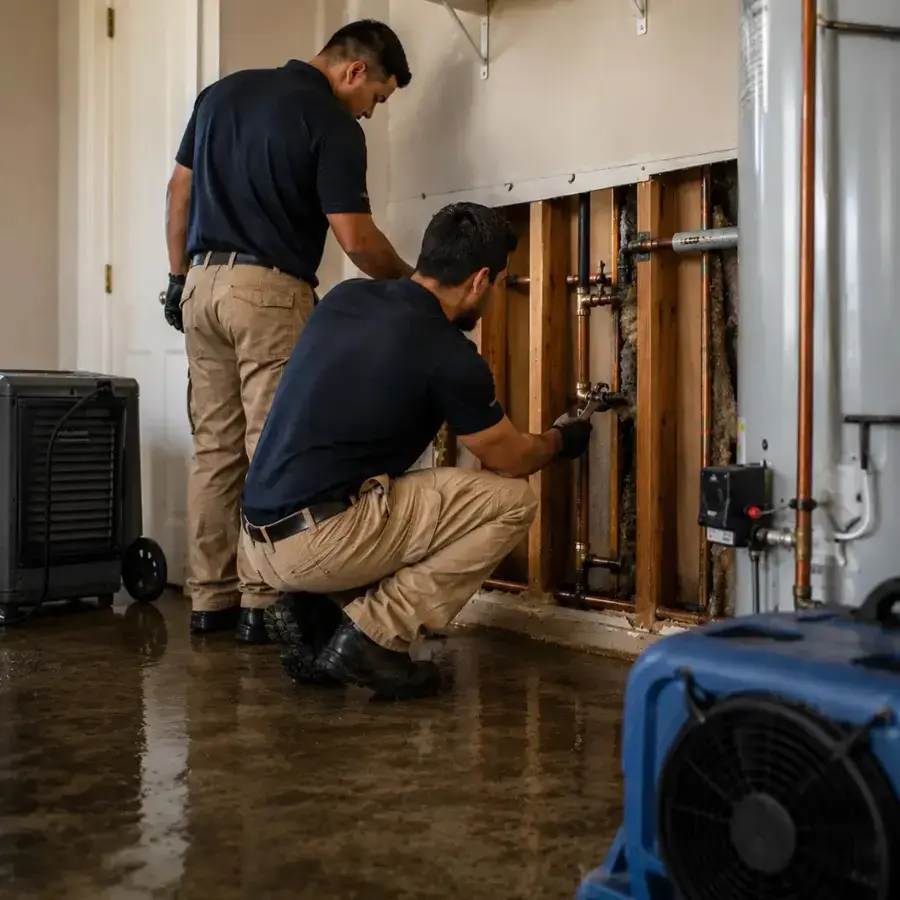
First steps for structural drying and dehumidification in Grand Terrace
- Keep it running
Leave the equipment running and keep it plugged in, even overnight.
- Keep doors closed
Closed doors and windows in the work area help the dehumidifiers pull moisture efficiently.
- Protect belongings
Keep paper, photos and electronics out of the drying zone.
- Be there for readings
Let the technician in for daily checks so equipment can be adjusted or removed.
Structural Drying and Dehumidification trade facts
How structural drying and dehumidification is handled in Grand Terrace
The tech who does the walkthrough maps moisture before any equipment goes down, and the equipment stays until the readings say dry.
- 1
Set a drying goal
Readings from unaffected rooms set the dry standard that the wet materials must reach.
- 2
Place equipment
Dehumidifiers go in the wettest areas and air movers are aimed along wet walls and floors.
- 3
Monitor daily
Technicians record temperature, humidity and moisture content and move or add units as needed.
- 4
Verify dry
When every reading reaches the goal, equipment comes out and the final log is delivered.
Rapid local response
The response team runs 24/7 dispatch and treats active water as urgent, because every hour of wicking adds drying time.
IICRC S500 drying standard
IICRC S500 is the industry drying standard. Crews map moisture first and pull equipment only when the readings say dry.
Claim-ready documentation
A moisture map, daily psychrometric logs and timestamped photos taken before any demolition, the file an adjuster reads.
East Valley water know-how
Slab leaks under hard water, attic AC drains and foothill storm runoff: the local pros know how water moves in a Highland home.
What does structural drying and dehumidification cost in Grand Terrace, CA?
Drying cost follows the class of loss, which describes how much water the materials hold. More wet surfaces, denser materials and longer run times raise the price.
Class 1 or 2
- One or two rooms
- Air movers and an LGR unit
- Three to five days
Class 3
- Walls and ceilings wet
- Several dehumidifiers
- Daily readings logged
Class 4
- Hardwood, plaster or slab
- Desiccant dehumidifiers
- Extended drying
These are typical ranges, not a quote: the category of water, the square footage, the material class and how fast drying started move the number most. Run the water damage cost calculator for a closer range; the restoration contractor who responds scopes the real job on site.
Extraction removes the water you can see. Drying removes the water you cannot, the moisture soaked into drywall, wood and concrete. If that moisture stays, it warps floors, loosens paint and invites mold, so the job is not finished until the readings say so.
How the equipment works together
Dehumidifiers pull vapor out of the air so wet materials keep releasing moisture. Air movers push dry air across surfaces to speed that release. Desiccant units are used on dense materials such as concrete, where a standard unit slows down.
- Temperature, humidity and moisture content logged each visit
- Equipment moved as wet areas shrink
- Hardwood and subfloor given extra time if needed
- Wall cavities opened or drilled when readings call for it
Measured, not guessed
A job is dry when the readings in the affected materials match unaffected material in the same house. That standard is why equipment stays for several days, and why a house can feel dry while framing is still wet. Technicians visit to record readings and adjust the setup.
Daily logs also give the adjuster dated proof of progress, which is why every visit is recorded in writing and kept with the final report. Photos of gauges, meters and equipment placement are added so the file shows the whole setup.
Living with the equipment
Equipment runs around the clock and uses electricity from the home, which comes from Southern California Edison. Air movers are loud, but they should not be turned off, since stopping them early slows the drying. A running dehumidifier should be left on until the technician signs off.
See water extraction for the first stage and burst pipe water damage for a common source.
Structural drying and dehumidification across Grand Terrace and nearby communities
Drying crews serve every Grand Terrace address, from homes near Grand Terrace Elementary School and Terrace View Elementary to offices and shops along Barton Road and hillside homes, in ZIP code 92313.
The same service nearby: structural drying and dehumidification in Highland, Colton, Loma Linda.
Water damage restoration in Grand Terrace · every town covered
Structural Drying and Dehumidification questions in Grand Terrace, CA
How long does structural drying take?
Most jobs run several days, but the real answer comes from readings. Dense materials such as hardwood and concrete take longer, and equipment stays until the material matches the dry goal.
Can I run my own fans and a store bought dehumidifier?
They help a little, but they cannot match the capacity of a commercial LGR unit or the airflow needed to dry framing. Partial drying often leaves moisture inside walls.
Why does the equipment run all day and night?
Drying is a continuous process. Stopping overnight lets moisture drift back into materials, and the schedule resets. Equipment is removed as soon as readings allow.
What happens if drying is slow?
Moisture stays in drywall and wood, which can warp floors, loosen finishes and support mold growth. Fast extraction and steady dehumidification are the best protection.
Does insurance pay for drying equipment?
Drying is usually part of a covered water loss, and the logs, readings and equipment records help the adjuster evaluate the claim. The policy and the cause of loss still decide the outcome.
Dry means measured dry
Equipment, daily readings and a final log confirm the structure is dry before anyone closes walls or lays new floors.