Water Extraction in Grand Terrace, CA
Standing water from a failed pipe, a heater or a main break soaks floors and walls fast. Crews pull it out with powerful extractors, then map what stayed wet before drying begins.
(888) 578-6508Send an extraction crew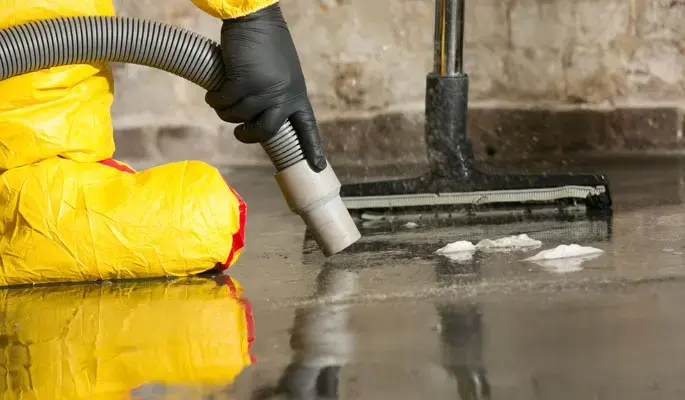
First steps for water extraction and removal in Grand Terrace
- Find the valve
Shut off the water at the fixture or main so the flooding stops growing.
- Stay off wet carpet
Walking spreads water into pad and tack strips, so keep traffic to dry paths.
- Lift small items
Move rugs, shoes and boxes off damp floors to stop stains and swelling.
- Call and describe
Tell dispatch how deep the water is and which rooms are affected.
Water Extraction and Removal trade facts
How water extraction and removal is handled in Grand Terrace
The tech who does the walkthrough maps moisture before any equipment goes down, and the equipment stays until the readings say dry.
- 1
Walk the loss
The crew lead checks each wet room and notes where the water came from.
- 2
Extract
Truck mounted pumps and hand wands pull the standing water, working from the deepest spot outward.
- 3
Pull what cannot dry
Saturated pad, wet baseboards and swollen cabinet kicks are removed so water is not trapped behind them.
- 4
Map and hand off
Meters record what is still wet, and the readings set up the drying plan and the claim file.
Rapid local response
The response team runs 24/7 dispatch and treats active water as urgent, because every hour of wicking adds drying time.
IICRC S500 drying standard
IICRC S500 is the industry drying standard. Crews map moisture first and pull equipment only when the readings say dry.
Claim-ready documentation
A moisture map, daily psychrometric logs and timestamped photos taken before any demolition, the file an adjuster reads.
East Valley water know-how
Slab leaks under hard water, attic AC drains and foothill storm runoff: the local pros know how water moves in a Highland home.
What does water extraction and removal cost in Grand Terrace, CA?
Extraction alone is the least costly part of a water loss. Pricing climbs with the area, the water category and how much carpet, pad or wall material has to come out.
Small area
- A single room or closet
- Hard floors like tile or vinyl
- Pumping and a few readings
Several rooms
- Carpet and pad pumped out
- Wet pad pulled if needed
- Moisture map for drying
Large or contaminated
- A whole floor or sewage
- Protective gear and disposal
- Porous material removal
These are typical ranges, not a quote: the category of water, the square footage, the material class and how fast drying started move the number most. Run the water damage cost calculator for a closer range; the restoration contractor who responds scopes the real job on site.
Water extraction is the first job on almost every wet floor. Pumps and wands move gallons out of carpet, pad and flooring while the damage is still shallow, and the sooner that happens, the less drywall and subfloor ends up soaking in it.
What gets extracted
- Carpet and pad that hold water like a sponge
- Standing water on tile, vinyl and bare slab floors
- Water trapped under laminate and cabinet toe kicks
- Detail passes along baseboards and door thresholds
Large flat areas get a truck mounted unit, while hand tools reach closets, stair edges and tight corners where water collects.
Water main breaks and other local causes
In Grand Terrace the cause is often a plumbing failure inside the house, but water can also arrive from outside. A water main broke near Michigan and Main streets on August 27, 2025, flooding a neighborhood and at least one home, and a main ruptured at Barton Road and Michigan Street in June 2015.
Those events show how little warning an extraction call gives. The water arrives at night, spreads across a tile floor and starts moving into baseboards before anyone has found the valve. Fast pumping is what keeps a wet floor from becoming a wet wall.
After the water is out
Extraction does not finish the job. A moisture map shows what is still wet, and the structural drying stage sets air movers and dehumidifiers to pull out what a pump cannot reach. Contaminated water follows a different path, covered under sewage backup cleanup.
Photos and readings are kept with the job record, so the insurance adjuster can see what was removed and why. Crews also note where water entered, which rooms were affected and what was removed, so the claim file matches what happened.
Water extraction and removal across Grand Terrace and nearby communities
Extraction crews cover all of Grand Terrace and ZIP code 92313, including hillside homes on Blue Mountain, apartments and shops on the Barton Road corridor and houses near Mt. Vernon Avenue and Canal Street.
The same service nearby: water extraction and removal in Highland, Colton, Loma Linda.
Water damage restoration in Grand Terrace · every town covered
Water Extraction and Removal questions in Grand Terrace, CA
How soon should standing water be pumped out?
Water begins soaking into carpet pad, baseboards and drywall right away, so extraction should start as soon as it is safe. Delays let a small flood spread into walls and become a larger drying job.
Can a wet carpet be saved?
Often yes, if the water is clean and the carpet is extracted quickly. Pad is more likely to be pulled because it holds water and dries slowly. Sewage or long soaking usually means replacement.
Does extraction include drying?
Extraction removes the bulk water, and drying is the next stage. Air movers and dehumidifiers then work on moisture in materials, with readings showing when the job is done.
What if the water came from a main break outside?
Water from outside is treated as potentially contaminated, so the crew checks the source and the materials involved before deciding what can stay. Storm and flood cleanup covers that situation.
Will furniture need to move?
Crews lift or block furniture off wet floors and move small items out of the work area. Heavy pieces are propped on blocks so legs do not stain or swell.
Do renters in Grand Terrace need to call the landlord?
Yes. Tell the landlord or property manager right away, because the owner's insurance may cover the building while renter's insurance covers belongings. The crew documents each affected unit.
Standing water needs a crew now
Water left standing keeps soaking into pad and drywall, so the crew pumps and maps the loss right after dispatch confirms it.