Structural Drying and Dehumidification in Loma Linda, CA
Wet framing, subfloor and drywall are dried with air movers and dehumidifiers, and measured each visit. In Loma Linda the equipment stays until readings, not a calendar, say the structure is dry.
(888) 578-6508Ask about drying a wet structure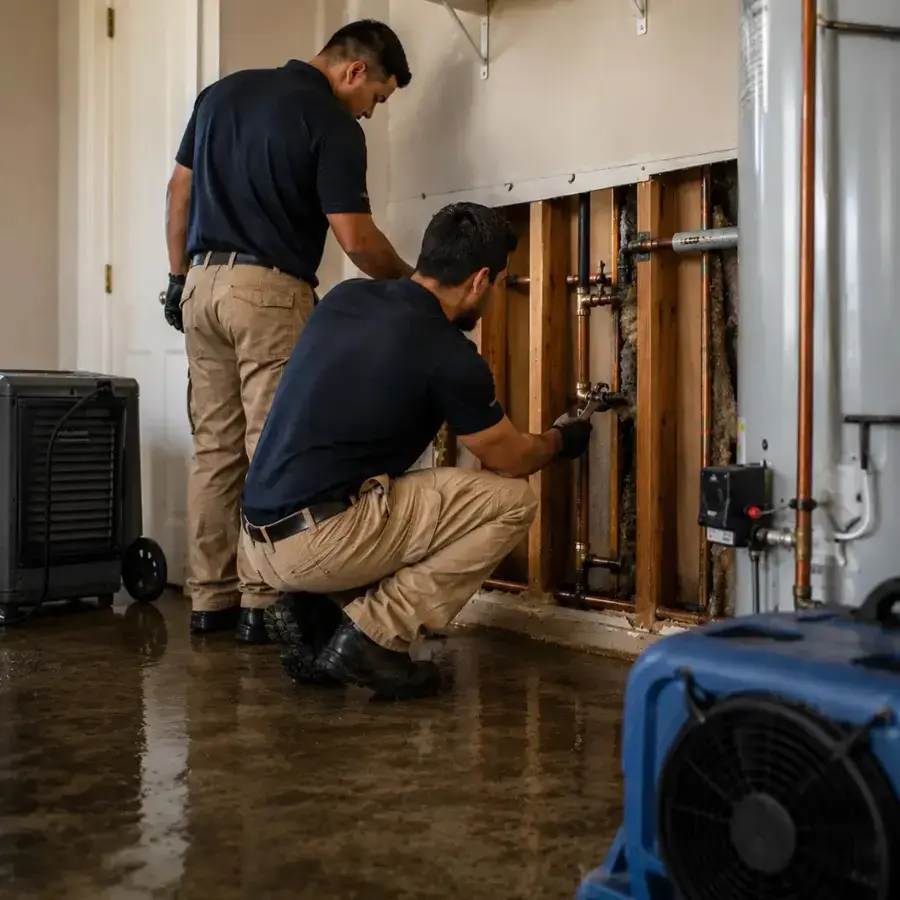
First steps for structural drying and dehumidification in Loma Linda
- Keep equipment running
Leave air movers and dehumidifiers on and do not unplug them to save power.
- Keep doors closed
Closed doors and windows keep humid outdoor air out of the drying zone.
- Note changes
Tell the crew about new stains, smells or damp spots between visits.
- Photograph progress
Take photos of the equipment and the opened walls for your claim file.
Structural Drying and Dehumidification trade facts
How structural drying and dehumidification is handled in Loma Linda
The tech who does the walkthrough maps moisture before any equipment goes down, and the equipment stays until the readings say dry.
- 1
Map the moisture
Meters and a thermal camera mark every wet area, and a dry reference reading is taken.
- 2
Place the equipment
Air movers and dehumidifiers are positioned from the map, with desiccant units added for dense materials.
- 3
Open what traps water
Baseboards, wall bottoms or flooring are opened where readings show moisture held behind them.
- 4
Read and adjust
Daily readings steer equipment changes, and units leave once the structure matches the dry reference.
Rapid local response
The response team runs 24/7 dispatch and treats active water as urgent, because every hour of wicking adds drying time.
IICRC S500 drying standard
IICRC S500 is the industry drying standard. Crews map moisture first and pull equipment only when the readings say dry.
Claim-ready documentation
A moisture map, daily psychrometric logs and timestamped photos taken before any demolition, the file an adjuster reads.
East Valley water know-how
Slab leaks under hard water, attic AC drains and foothill storm runoff: the local pros know how water moves in a Highland home.
What does structural drying and dehumidification cost in Loma Linda, CA?
Structural drying in Loma Linda usually costs $1,000 to $8,000 or more. Class 1 or 2 jobs cost least, and Class 4 drying of hardwood, plaster or slab costs the most.
Class 1 or 2
- One or two rooms affected
- Air movers and an LGR unit
- Short stay with daily readings
Class 3
- Walls and ceilings both wet
- Several dehumidifiers running
- Daily psychrometric logs
Class 4
- Hardwood, plaster or slab wet
- Desiccant dehumidifiers brought in
- Extended drying and monitoring
These are typical ranges, not a quote: the category of water, the square footage, the material class and how fast drying started move the number most. Run the water damage cost calculator for a closer range; the restoration contractor who responds scopes the real job on site.
Extraction removes the water you can see. Structural drying removes the water you cannot, the moisture held inside studs, subfloor, drywall and concrete. Without it, a floor can look dry while the framing underneath stays wet for weeks.
What structural drying actually does
Air movers push dry air across wet surfaces so moisture leaves the material, and dehumidifiers pull that moisture out of the air so it does not settle somewhere else. LGR units handle most jobs, and desiccant units take over where wood, plaster or concrete holds water stubbornly.
How drying is measured
- Moisture meter readings on wood, drywall and slab
- Thermal camera images of hidden wet areas
- Air temperature and humidity logged at each visit
- A dry reference reading from an unaffected area
The dry reference matters because every building dries to a slightly different baseline, so the goal is not a fixed number but a match with a dry part of the same structure.
Drying in Loma Linda buildings
The largest share of Loma Linda housing was built between 1970 and 1979, and the city also has hospital, university and retail buildings with larger floors and shared walls. No set drying time is assumed. Each structure is measured, equipment is placed from the moisture map, and readings decide when it leaves.
Equipment is moved as the readings change, because a room that dries quickly no longer needs the same airflow, and the freed units can go to a slower wall.
Walls and ceilings that stay in place are checked from both sides when possible, since a surface that looks dry can hide a wet cavity behind it.
Drying follows water extraction, and for a loss that began with a pipe, see burst pipe water damage.
Structural drying and dehumidification across Loma Linda and nearby communities
Structural drying crews work throughout Loma Linda, from Mound City and the North Central Neighborhood to Bryn Mawr and the South Hills, with dispatch to ZIP codes 92350, 92354 and 92357.
The same service nearby: structural drying and dehumidification in Highland, Grand Terrace, Redlands.
Structural Drying and Dehumidification questions in Loma Linda, CA
How do I know the structure is dry?
Meter readings on the same materials fall to match a dry reference, and the psychrometric log shows steady air conditions. A floor that feels dry is not proof.
Why is the equipment so loud?
Air movers and dehumidifiers run all day to pull moisture out of materials, and cutting the runtime early only stalls the drying and leaves wet framing behind.
Will drying raise my electric bill?
It can, since several machines run for the whole drying period. Keep notes on the usage, because many carriers consider the extra power part of the claim.
Can wet drywall always be dried in place?
Not always. Clean water on solid drywall can often be dried, but sagging, stained or contaminated drywall is cut out so the cavity behind it can dry.
What separates LGR from desiccant units?
LGR units remove moisture with refrigeration and handle most jobs. Desiccant units use a drying wheel and work in cooler conditions or on dense materials like hardwood and concrete.
Wet framing in Loma Linda?
Call and describe what got wet, and the crew will map the moisture, place the equipment and log readings until the structure is dry.