Water Extraction and Removal in Highland, CA
Standing water does the most damage in the first hours. The extraction crew pulls it out with truck-mounted units, maps what soaked in and sets drying equipment the same visit, 24/7 across Highland.
(888) 578-6508Get Highland water extraction started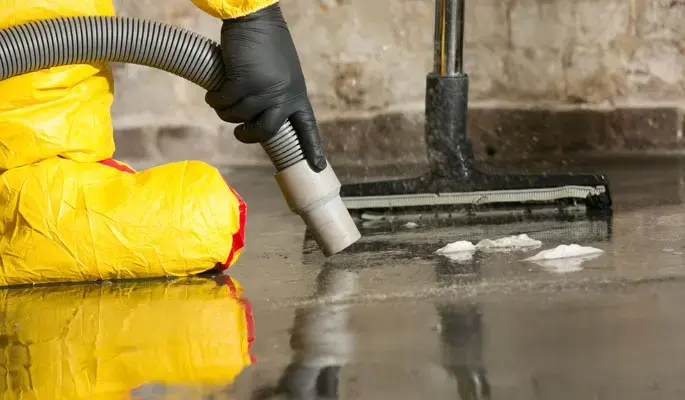
First steps for water extraction and removal in Highland
- Stop the source
Close the main valve or the fixture shut-off before anything else.
- Kill power to wet areas
Switch off breakers for wet rooms from a dry spot at the panel.
- Photograph everything
Take photos of standing water and the source before anything moves.
- Move what you can
Lift rugs, boxes and furniture onto blocks or out of the room.
Water Extraction and Removal trade facts
How water extraction and removal is handled in Highland
The tech who does the walkthrough maps moisture before any equipment goes down, and the equipment stays until the readings say dry.
- 1
Source and safety check
The response team confirms the water is off and the power is safe before anyone steps in.
- 2
Truck-mounted extraction
The extraction crew pulls standing water from the wettest room outward.
- 3
Moisture mapping
The tech who does the walkthrough maps wet walls, baseboards and slab with meters and thermal imaging.
- 4
Drying setup
The drying team sets air movers and LGR dehumidifiers and logs the first readings.
Rapid local response
The response team runs 24/7 dispatch and treats active water as urgent, because every hour of wicking adds drying time.
IICRC S500 drying standard
IICRC S500 is the industry drying standard. Crews map moisture first and pull equipment only when the readings say dry.
Claim-ready documentation
A moisture map, daily psychrometric logs and timestamped photos taken before any demolition, the file an adjuster reads.
East Valley water know-how
Slab leaks under hard water, attic AC drains and foothill storm runoff: the local pros know how water moves in a Highland home.
What does water extraction and removal cost in Highland, CA?
Water extraction in Highland typically runs $400 to $3,500 on its own, depending on how much water there is, the square footage and whether carpet and pad come up.
Small area
- One room or a closet
- Tile, vinyl or bare slab
- Extraction plus readings
Several rooms
- Carpet and pad extraction
- Wet pad pulled if needed
- Moisture map for drying
Large or contaminated
- Whole floor or Category 3
- Protective gear and disposal
- Porous material removal
These are typical ranges, not a quote: the category of water, the square footage, the material class and how fast drying started move the number most. Run the Highland water damage cost calculator for a closer range; the restoration contractor who responds scopes the real job on site.
Extraction is the first move on almost every water loss in Highland. Every gallon the extraction crew pulls out as liquid is a gallon the dehumidifiers never have to pull out of the air, so a thorough pump-out cuts days off the dry-out.
How water extraction works in a Highland home
The restoration team starts at the source: a burst pipe, a slab leak, a water heater or storm runoff at the slider. Once the water stops, the extraction crew works from the wettest room outward with truck-mounted extraction, which moves far more water than a shop vacuum and exhausts it outside the house.
- Weighted extraction tools press water out of carpet and pad.
- Squeegee wands clear tile, vinyl and bare slab.
- Portable units reach upstairs rooms, closets and tight spaces.
What water extraction leaves behind
Extraction removes standing water, not the water that has already wicked into drywall, baseboards and the slab. The tech who does the walkthrough uses pinless meters and thermal imaging to map that hidden moisture, and the map decides where air movers and structural drying equipment go.
Carpet pad soaked with clean water is often pulled and replaced, because it holds water like a sponge. Carpet itself can sometimes be dried in place when extraction starts early.
Water extraction for storm runoff and sewage
Water that came in from outside or from a drain is Category 3. The response team wears protective gear, extracts it, removes porous materials it touched and treats the area before drying. The sewage backup cleanup and storm and flash flood cleanup pages cover those jobs in detail. FEMA flood information for the area is on FloodSmart.gov, and storm safety basics are on Ready.gov.
Trade fact: moving water out as liquid is far faster than evaporating it, which is why extraction always comes before the fans.
Water extraction and removal across Highland and the East Valley
Coverage runs across all of ZIP 92346, from the Base Line corridor and Palm Avenue out to East Highlands Ranch, Highland Hills and the homes along Greenspot Road, plus nearby San Bernardino, Redlands, Mentone and Loma Linda.
Related water damage services in Highland
Water Extraction and Removal questions in Highland, CA
How fast should water extraction start in Highland?
As soon as the source is stopped. Wet drywall and pad keep wicking water upward, and mold can start on wet materials inside 24 to 48 hours. The response team runs 24/7 dispatch for that reason.
Can a shop vacuum do the job?
A shop vacuum can lift a small spill, but it leaves most of the water in carpet and pad. Truck-mounted extraction moves far more water and exhausts it outside, which shortens drying.
Does the carpet have to be thrown out?
Not always. Carpet wet with clean water can often be dried in place when extraction starts early. Pad usually gets replaced, and anything touched by Category 3 water gets removed.
How is the water category decided?
By the source. A supply pipe or slab leak is Category 1, washer or AC drain water is Category 2, and sewage or storm runoff is Category 3.
Will extraction dry the walls too?
No. Extraction removes standing water. Water in drywall, baseboards and the slab comes out through structural drying with air movers and dehumidifiers.
Does insurance pay for water extraction?
Extraction is usually part of the mitigation on a covered sudden and accidental loss, but coverage depends on your policy. Check with your own insurer.
Standing water in a Highland home? Call now.
The extraction crew pulls the water, maps what soaked in and starts the dry-out, 24/7.