Structural Drying and Dehumidification in Highland, CA
Surface dry is not structurally dry. The drying team measures water inside framing, subfloor, walls and slabs and runs equipment until every reading reaches the goal, 24/7 across Highland.
(888) 578-6508Start the Highland dry-out now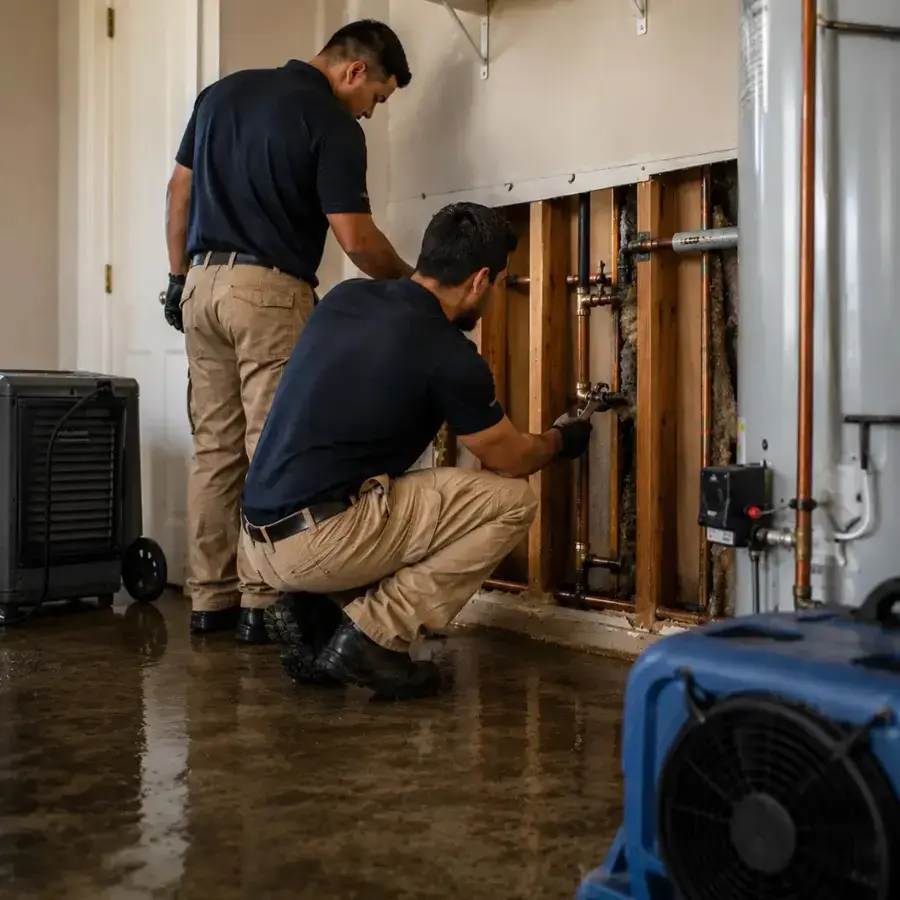
First steps for structural drying and dehumidification in Highland
- Stop the water
Make sure the source is off before drying starts.
- Keep doors and windows managed
Leave the drying team's setup in place; open windows can slow dehumidifiers.
- Leave equipment running
Do not switch off air movers or dehumidifiers between readings.
- Keep a photo record
Photograph rooms, equipment and readings for the claim file.
Structural Drying and Dehumidification trade facts
How structural drying and dehumidification is handled in Highland
The tech who does the walkthrough maps moisture before any equipment goes down, and the equipment stays until the readings say dry.
- 1
Moisture map and dry reference
The tech who does the walkthrough maps wet materials and picks a dry reference.
- 2
Equipment sized to the load
The drying team sets air movers and dehumidifiers by room size and class.
- 3
Daily readings
Crews log moisture and psychrometric readings each day and adjust the setup.
- 4
Verified dry
Equipment comes out when wet materials read within 2 to 4 points of the reference.
Rapid local response
The response team runs 24/7 dispatch and treats active water as urgent, because every hour of wicking adds drying time.
IICRC S500 drying standard
IICRC S500 is the industry drying standard. Crews map moisture first and pull equipment only when the readings say dry.
Claim-ready documentation
A moisture map, daily psychrometric logs and timestamped photos taken before any demolition, the file an adjuster reads.
East Valley water know-how
Slab leaks under hard water, attic AC drains and foothill storm runoff: the local pros know how water moves in a Highland home.
What does structural drying and dehumidification cost in Highland, CA?
Structural drying in Highland typically runs $1,000 to $8,000, depending on the class of water loss, the square footage and how many days the equipment runs.
Class 1 or 2
- One or two rooms
- Air movers and an LGR unit
- Three to five days
Class 3
- Walls and ceilings wet
- Several dehumidifiers
- Daily psychrometric logs
Class 4
- Hardwood, plaster or slab
- Desiccant dehumidifiers
- Extended drying
These are typical ranges, not a quote: the category of water, the square footage, the material class and how fast drying started move the number most. Run the Highland water damage cost calculator for a closer range; the restoration contractor who responds scopes the real job on site.
Structural drying is the part of a water loss that decides whether the house stays healthy. Water that soaked into studs, plates, subfloor, stucco walls and concrete keeps evaporating into the house for weeks if nobody pulls it out. In Highland, the dry outdoor air helps, but a wet slab or a wall cavity still has to be dried on purpose.
How structural drying works
- Moisture mapping before any equipment goes down.
- Air movers set to each room's evaporation load.
- LGR dehumidifiers for most losses, desiccants for slabs, hardwood and plaster.
- Daily readings and psychrometric logs to track progress.
The tech who does the walkthrough picks a dry reference in an unaffected part of the house and measures the wet materials against it. The drying team adjusts the equipment each day based on the readings, and equipment comes out when the wet materials read within 2 to 4 points of that reference.
Structural drying classes and time
The class of water loss sets how much equipment a room needs. Class 1 is a small area with little absorption. Class 2 and 3 involve carpet, walls and ceilings. Class 4 is dense material like hardwood, plaster and concrete, which dries slowly and often needs desiccants. A contained Class 1 loss usually dries in three to five days; hardwood and slabs take longer. See slab leak water damage for slab drying in detail.
Why drying logs matter for the claim
Adjusters look for proof that the structure reached dry, not just that fans ran. The restoration contractor who responds keeps the moisture map, daily readings and psychrometric logs in the claim file. Indoor moisture basics are on the EPA indoor air quality pages, and home energy and humidity tips are on the Energy Saver site.
Trade fact: equipment stays until the readings say dry, not until the surface feels dry.
Structural drying and dehumidification across Highland and the East Valley
Coverage runs across all of ZIP 92346, from the Base Line corridor and Palm Avenue out to East Highlands Ranch, Highland Hills and the homes along Greenspot Road, plus nearby San Bernardino, Redlands, Mentone and Loma Linda.
Related water damage services in Highland
Structural Drying and Dehumidification questions in Highland, CA
What is the difference between surface drying and structural drying?
Surface drying makes floors and walls feel dry. Structural drying removes the water inside framing, subfloor, walls and slabs, verified with meter readings.
How do crews know when the house is dry?
They compare wet materials to a dry reference in an unaffected area and stop when readings are within 2 to 4 points of it.
Why are dehumidifiers needed in dry Highland weather?
Outdoor air is dry, but inside a closed, wet house the humidity climbs fast. Dehumidifiers pull that moisture out so materials keep drying.
What are desiccant dehumidifiers for?
Desiccants pull moisture at lower humidity than LGR units, which helps with dense Class 4 materials like hardwood, plaster and concrete slabs.
Can I turn off the equipment at night?
No. Switching equipment off stalls the drying and can let materials reabsorb moisture. The drying team sets the schedule.
How long does structural drying take?
A contained Class 1 loss usually dries in three to five days. Class 4 materials like hardwood and slabs take longer.
Still damp after fans in a Highland home? Call now.
The drying team maps the moisture, runs LGR and desiccant dehumidifiers and logs every reading, 24/7.