Burst Pipe Cleanup in Grand Terrace, CA
A split pipe can pour water into walls and ceilings for hours before anyone notices. Crews extract the flooding, open the wet cavities and dry the structure so the repair does not close over damp framing.
(888) 578-6508Get a burst pipe crew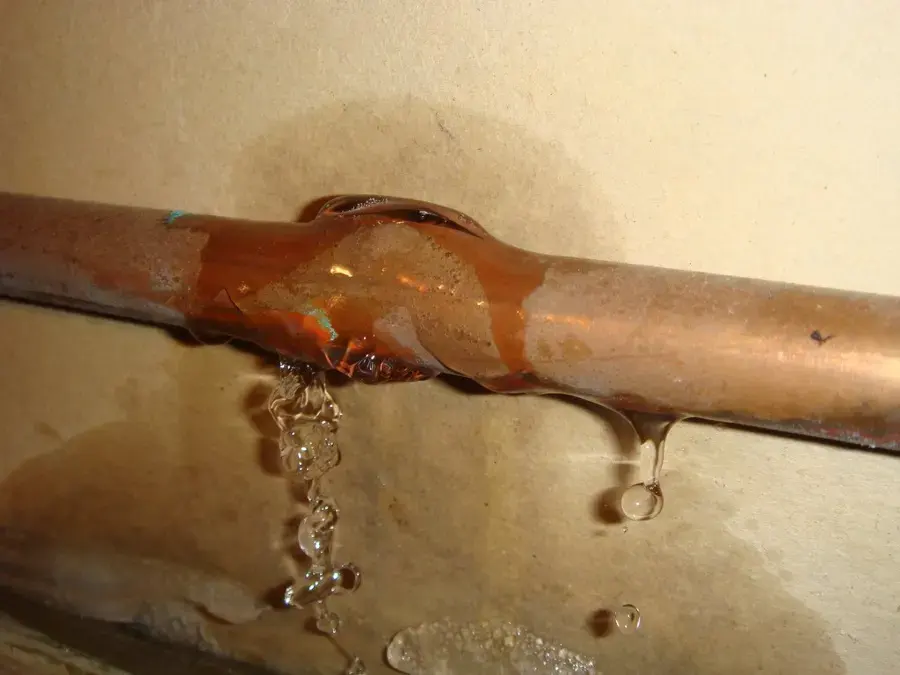
First steps for burst pipe water damage in Grand Terrace
- Shut the valve
Close the main or fixture valve, then open a low faucet to ease pressure.
- Kill the power
Switch off breakers to wet rooms if the panel is dry and reaching it is safe.
- Photograph damage
Capture wet walls, ceilings and belongings before anything is moved or thrown away.
- Call for help
Describe which rooms are wet and how deep the water is.
Burst Pipe Water Damage trade facts
How burst pipe water damage is handled in Grand Terrace
The tech who does the walkthrough maps moisture before any equipment goes down, and the equipment stays until the readings say dry.
- 1
Stop and measure
A thermal camera and a moisture meter show which walls and ceilings took on water.
- 2
Pump and open
Extractors clear floors while flood cuts and ceiling openings release trapped water and let air in.
- 3
Dry the cavities
Dehumidifiers and air movers run while specialty drying tools push warm air into closed wall spaces.
- 4
Verify and report
Daily readings confirm progress, and the final log shows every wet area reached its dry target.
Rapid local response
The response team runs 24/7 dispatch and treats active water as urgent, because every hour of wicking adds drying time.
IICRC S500 drying standard
IICRC S500 is the industry drying standard. Crews map moisture first and pull equipment only when the readings say dry.
Claim-ready documentation
A moisture map, daily psychrometric logs and timestamped photos taken before any demolition, the file an adjuster reads.
East Valley water know-how
Slab leaks under hard water, attic AC drains and foothill storm runoff: the local pros know how water moves in a Highland home.
What does burst pipe water damage cost in Grand Terrace, CA?
Burst pipe costs depend on how long the water ran and how many walls, ceilings and floors it reached. A quick shutoff keeps the job in the lowest range, while hours of flow push it higher.
Caught fast
- One wall or a single room
- Extraction and baseboards off
- Drying inside the cavity
Walls and ceilings
- Water in several rooms
- Flood cuts and wet insulation out
- LGR dehumidifiers running
Hours of flow
- Water ran for hours
- Ceilings and subfloor soaked
- Full structural drying
These are typical ranges, not a quote: the category of water, the square footage, the material class and how fast drying started move the number most. Run the water damage cost calculator for a closer range; the restoration contractor who responds scopes the real job on site.
Pipes burst when they crack under pressure, fail at a joint or give way after a fitting wears out. Water sprays or pours into the cavity, and how quickly the valve is closed decides whether the damage stays in one room or spreads across the house.
Stop the water, then call
- Close the main shutoff valve or the local fixture valve
- Open a faucet at the lowest point to relieve pressure
- Switch off power to wet areas only if it is safe
- Move electronics and small valuables out of the splash zone
A plumber repairs the pipe, and the city says plumbing repair or replacement generally needs a Building Permit. The restoration crew works around that repair.
Water inside versus a main break outside
Water that starts inside the house is a plumbing problem, while a main break outside is a utility problem. Riverside Highland Water Company supplies Grand Terrace, and mains have broken here, including the Michigan and Main streets break in August 2025 and the Barton Road and Michigan Street break in June 2015.
Either way, the interior damage is handled the same: shut off, extract, open the wet cavities and dry. The crew documents the source so the adjuster and the water company each have what they need.
What gets opened and dried
Water runs down inside walls, so drywall is cut above the wet mark and soaked insulation is removed. Ceilings that sag or bubble are opened to let trapped water out safely. Subfloor and framing are dried in place whenever readings allow.
Large burst events often include water extraction first and structural drying after, with readings logged every visit. Each stage is photographed so the claim file shows the damage before and after.
Burst pipe water damage across Grand Terrace and nearby communities
Burst pipe crews respond across Grand Terrace in ZIP code 92313, including homes near Mt. Vernon Avenue and Preston Street, the City Center Court area and neighborhoods all the way up the Blue Mountain hillside.
The same service nearby: burst pipe water damage in Highland, Colton, Loma Linda.
Water damage restoration in Grand Terrace · every town covered
Burst Pipe Water Damage questions in Grand Terrace, CA
What is the first thing to do after a pipe bursts?
Close the main or the nearest fixture valve, open a low faucet to ease pressure and call dispatch. Photograph the damage before moving belongings so the claim has a record.
Is a burst pipe covered by insurance?
Sudden bursts are often covered, but policies differ on deductibles and on the cost of reaching the pipe. The crew provides photos, readings and a drying log for the adjuster.
Do walls always need to be opened?
Not always. Drywall that stayed dry above the water mark is left alone, and small wet sections are cut out only when readings show moisture inside. Insulation that soaked up water is usually removed.
What if the pipe burst while nobody was home?
Water that ran for hours soaks ceilings and subfloors, so the job moves into the higher price tier. Extended drying and more removal are likely, and the crew documents how far the water traveled.
Who handles a broken water main outside the house?
Riverside Highland Water Company supplies Grand Terrace, so a main break in the street goes to the utility. The restoration crew handles the water that reaches the home.
Can small kids and pets stay in the house?
Keep them out of wet rooms until the crew has checked electrical hazards and slipping risks. Equipment is noisy, so a quiet room away from the work is best.
Stop the spread of water damage
Water in a wall keeps moving, and drying it quickly protects insulation, subfloor and the rest of the house.