Structural Drying in Colton, CA
Wet framing, subfloor and drywall dry slowly without controlled equipment. The crew sets dehumidifiers and air movers in Colton homes and checks readings daily until every material reaches normal.
(888) 578-6508Colton drying plan help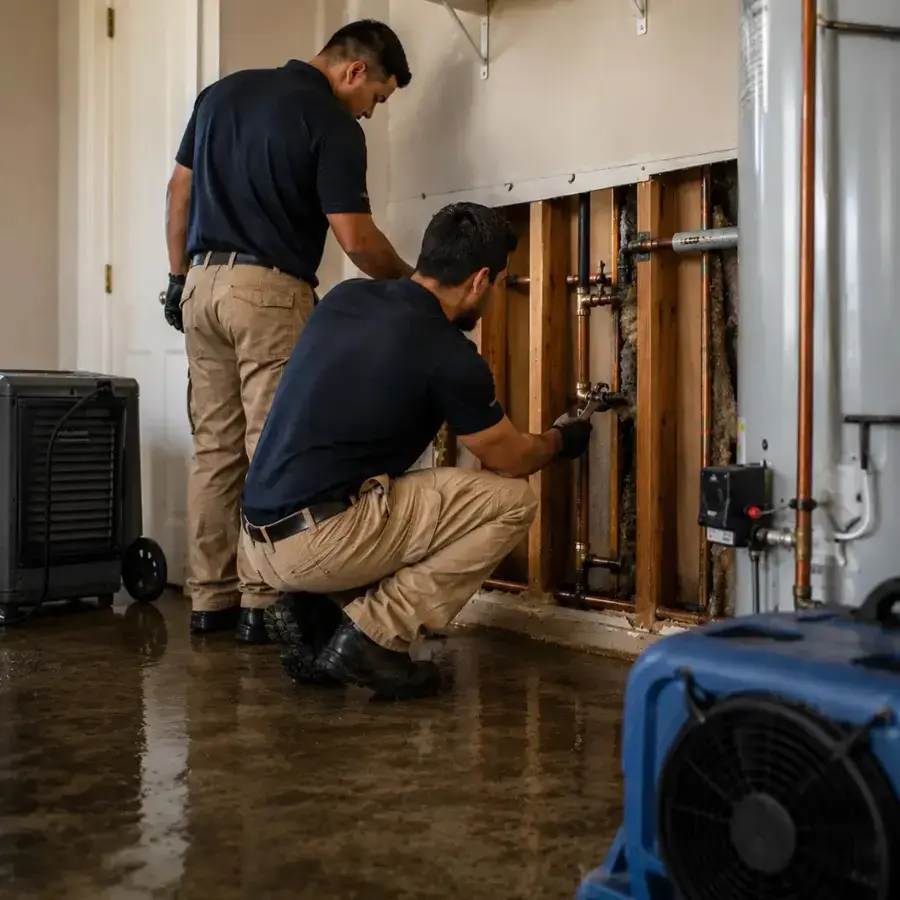
First steps for structural drying and dehumidification in Colton
- Keep equipment running
Leave dehumidifiers and air movers on, because stopping early restarts the damage.
- Close doors and windows
Closing the area helps dehumidifiers hold humidity down.
- Do not move gear
Leave equipment where the technician placed it and keep cords clear.
- Report new stains
Tell the crew about new spots, odors or damp patches right away.
Structural Drying and Dehumidification trade facts
How structural drying and dehumidification is handled in Colton
The tech who does the walkthrough maps moisture before any equipment goes down, and the equipment stays until the readings say dry.
- 1
Measure first
Meters and an infrared camera establish the starting readings and mark the wet areas.
- 2
Set the equipment
Dehumidifiers and air movers are placed by room size and material, then switched on.
- 3
Monitor each day
The crew returns to log humidity and moisture, shifting equipment where a spot lags.
- 4
Release and document
Equipment is removed once readings match dry reference values, and the logs are saved for the file.
Rapid local response
The response team runs 24/7 dispatch and treats active water as urgent, because every hour of wicking adds drying time.
IICRC S500 drying standard
IICRC S500 is the industry drying standard. Crews map moisture first and pull equipment only when the readings say dry.
Claim-ready documentation
A moisture map, daily psychrometric logs and timestamped photos taken before any demolition, the file an adjuster reads.
East Valley water know-how
Slab leaks under hard water, attic AC drains and foothill storm runoff: the local pros know how water moves in a Highland home.
What does structural drying and dehumidification cost in Colton, CA?
Structural drying in Colton usually runs $1,000 to $2,500 for one or two rooms and $5,000 to $8,000 or more for hardwood, plaster or slab.
Class 1 or 2
- One or two rooms
- Air movers and one dehumidifier
- Several days
Class 3
- Walls and ceilings wet
- Several dehumidifiers
- Daily humidity logs
Class 4
- Hardwood, plaster or slab
- Desiccant dehumidifiers
- Longer drying period
These are typical ranges, not a quote: the category of water, the square footage, the material class and how fast drying started move the number most. Run the water damage cost calculator for a closer range; the restoration contractor who responds scopes the real job on site.
Water that is pumped out is not the end of a loss. Drywall, wood and concrete hold moisture inside, and it has to be pulled out slowly and measured. Drying is controlled, not simply fans blowing in a room.
How drying equipment works together
Dehumidifiers remove water vapor from the air, so surfaces keep releasing moisture into a drier room. Air movers push that air across wet materials, which speeds up release. Using only one of the two tools leaves moisture behind.
Matching the method to the material
- Wood framing and drywall dry well with refrigerant dehumidifiers
- Dense materials like hardwood or slab need desiccant units
- Wall cavities may get small holes or removed baseboards
- Equipment is repositioned during the job
The class of damage changes the plan. A small affected area with little absorbent material dries differently than saturated walls, ceilings and hardwood. The technician sets equipment counts after meters and an infrared camera map the wet area.
That is why slab, plaster and hardwood drying follows a schedule set from readings, not a fixed number of days.
Daily checks
Each visit, the crew records temperature, humidity and moisture readings at fixed spots. Equipment is moved or adjusted if a spot stalls. Records show an adjuster that equipment was needed and when materials reached normal.
Equipment noise and warm air are normal while dehumidifiers run around the clock.
Why not just open windows
Open windows and household fans move air, but they cannot pull moisture out of studs, subfloor or concrete at the rate those materials need. Drying equipment gives the control a loss file requires. See water extraction.
Structural drying and dehumidification across Colton and nearby communities
Structural drying crews work across Colton, including Cooley Ranch, South Colton, Agua Mansa, Downtown Colton and Reche Canyon, in ZIP codes 92324 and 92313, for residential, light commercial and warehouse spaces.
The same service nearby: structural drying and dehumidification in Highland, Grand Terrace, Loma Linda.
Structural Drying and Dehumidification questions in Colton, CA
How long does structural drying take?
Most jobs need several days, with readings checked every visit. Dense materials such as hardwood or concrete take longer, and equipment stays until every material reads dry. Large commercial floors follow the same method, covered under commercial water damage.
Why are the dehumidifiers so loud?
They run constantly to remove moisture from the air. That noise and the warm air they put out are normal during a drying job.
Can I turn the equipment off at night?
Please do not. Stopping equipment slows drying and can let moisture settle back into framing, which adds days to the job.
What does a psychrometric log show?
It records temperature, relative humidity and moisture readings at set spots. Together they show the room is drying and when it reaches a normal range.
Will the electric bill rise during drying?
Yes, equipment draws power for several days. Your policy may address that cost, so ask your insurer and keep the equipment logs the crew gives you.
Is drying needed after the water is extracted?
Yes. Extraction removes standing water, but walls, framing and floors still hold moisture inside. Drying removes that hidden water and prevents swelling and odors.
Dry it all the way
Tell dispatch which rooms were wet and when the water was removed, and a crew will set equipment counts from readings.