Water Extraction in San Bernardino, CA
Standing water in a San Bernardino home gets pumped and pulled out first, whether it came from a broken supply pipe, a washer hose or storm runoff, and then the floors and walls are mapped and dried.
(888) 578-6508San Bernardino water removal help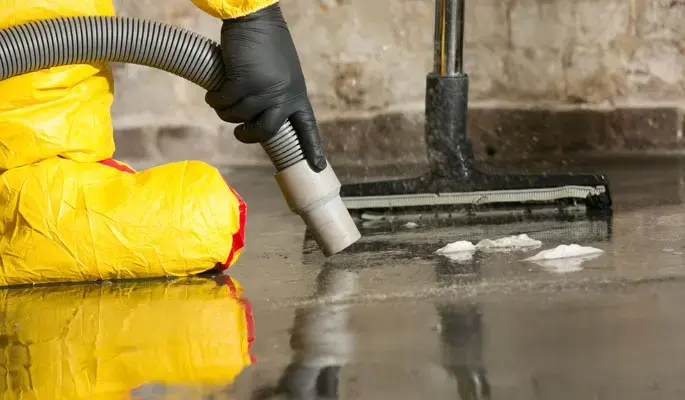
First steps for water extraction and removal in San Bernardino
- Stop the source
Shut the main valve or appliance supply if it is safe to reach.
- Keep clear of power
Stay out of standing water near outlets and cords.
- Lift small items
Raise rugs, boxes and light furniture onto dry ground.
- Take photos first
Record the wet areas and damaged items for the claim.
Water Extraction and Removal trade facts
How water extraction and removal is handled in San Bernardino
The tech who does the walkthrough maps moisture before any equipment goes down, and the equipment stays until the readings say dry.
- 1
Pump and extract
Submersible pumps clear deep water, then wands and truck-mounted units pull it from carpet and hard floors.
- 2
Map the moisture
A meter and thermal camera trace water into walls, subfloor and cabinets.
- 3
Remove what will not dry
Soaked pad, wet insulation and swollen trim are cut out and bagged.
- 4
Set the drying plan
Air movers and dehumidifiers go in, and readings continue until the structure is dry.
Rapid local response
The response team runs 24/7 dispatch and treats active water as urgent, because every hour of wicking adds drying time.
IICRC S500 drying standard
IICRC S500 is the industry drying standard. Crews map moisture first and pull equipment only when the readings say dry.
Claim-ready documentation
A moisture map, daily psychrometric logs and timestamped photos taken before any demolition, the file an adjuster reads.
East Valley water know-how
Slab leaks under hard water, attic AC drains and foothill storm runoff: the local pros know how water moves in a Highland home.
What does water extraction and removal cost in San Bernardino, CA?
Extraction in San Bernardino runs $400 to $1,000 for small areas and $2,200 to $3,500 or more for a large or contaminated loss. Floor type and water category set the cost.
Small area
- One room or closet
- Tile, vinyl or bare slab
- Pump out and readings
Several rooms
- Carpet and pad extraction
- Wet pad cut out
- Moisture map for drying
Large or contaminated
- Whole floor or sewage water
- Protective gear and disposal
- Porous materials removed
These are typical ranges, not a quote: the category of water, the square footage, the material class and how fast drying started move the number most. Run the water damage cost calculator for a closer range; the restoration contractor who responds scopes the real job on site.
When water is standing on a floor in San Bernardino, extraction is the first job and everything else waits on it. Whether the source was a pipe, a hose or runoff, the longer water sits, the further moisture pushes into the pad, the baseboards and the bottom of the walls.
Where the water usually comes from
- Supply breaks and failed hoses that flood a kitchen, bath or laundry floor.
- Storm runoff that crosses a garage slab or door threshold.
- Water heater and appliance leaks that spread under a wall.
- Sprinkler or irrigation faults that soak a slab edge.
All of the city's drinking water comes from local groundwater in the Bunker Hill Basin, and none of that changes how a wet floor is handled. The standing water comes out first, whatever its source.
How the removal is carried out
Crews start with the deepest water using submersible pumps, then switch to wand tools and truck-mounted extraction on carpet and pad. A moisture meter and thermal camera show where water went beyond the visible wet area, so the removal covers the damp edges as well as the puddle.
Carpet gets lifted at a corner to check the pad below. Soaked pad is normally cut out and discarded because it holds water and dries slowly, while the carpet itself can often be dried in place. Tile, vinyl and bare slab are simpler and usually need less time.
After the water is out
Extraction removes the standing water, not the moisture in the framing and subfloor. That is why a moisture map, air movers and a dehumidifier follow, and why structural drying is scheduled before anyone calls the floor finished. Readings are logged until the materials reach their dry standard.
Water extraction and removal across San Bernardino and nearby communities
Water extraction crews work across San Bernardino, from Verdemont and the University District through Downtown and Del Rosa to Hospitality Lane and Riverview, including homes and shops in the 92404 and 92408 ZIP codes.
The same service nearby: water extraction and removal in Highland, Colton, Loma Linda.
Water damage restoration in San Bernardino · every town covered
Related water damage services in San Bernardino
Water Extraction and Removal questions in San Bernardino, CA
How fast does standing water damage a floor?
Water starts moving into pad, baseboards and wall bottoms right away, so the sooner extraction begins the fewer materials need to be removed rather than dried.
Is a shop vacuum enough for a wet floor?
A shop vacuum helps on a small spill, but it leaves moisture in the pad and subfloor. A moisture reading afterward shows whether anything is still wet.
Does it matter where the water came from?
Yes. Clean supply water, gray water and sewage are handled differently, and contaminated water means protective gear, disposal of porous materials and a separate sewage backup cleanup process.
Will the carpet have to be thrown out?
Often only the pad is. Carpet from a clean water source can usually be dried in place or lifted and dried, but sewage or long soaking can end that option.
Is extraction the same as drying?
No. Extraction removes the standing water, and structural drying then pulls the moisture out of framing and subfloor with air movers and dehumidifiers.
What should be photographed before removal?
The water level, the wet walls, damaged furniture and any visible source. Photos taken before extraction help a claim, and removal should not wait on them for long.
Standing water cannot wait
Pulling it out first limits what the pad, trim and walls absorb, and every day of delay adds material to the removal list.