Structural Drying in San Bernardino, CA
After the water is out, the framing, subfloor and walls still hold moisture. Structural drying in San Bernardino uses controlled airflow and dehumidification, then measures every material until it reads dry.
(888) 578-6508Schedule structural drying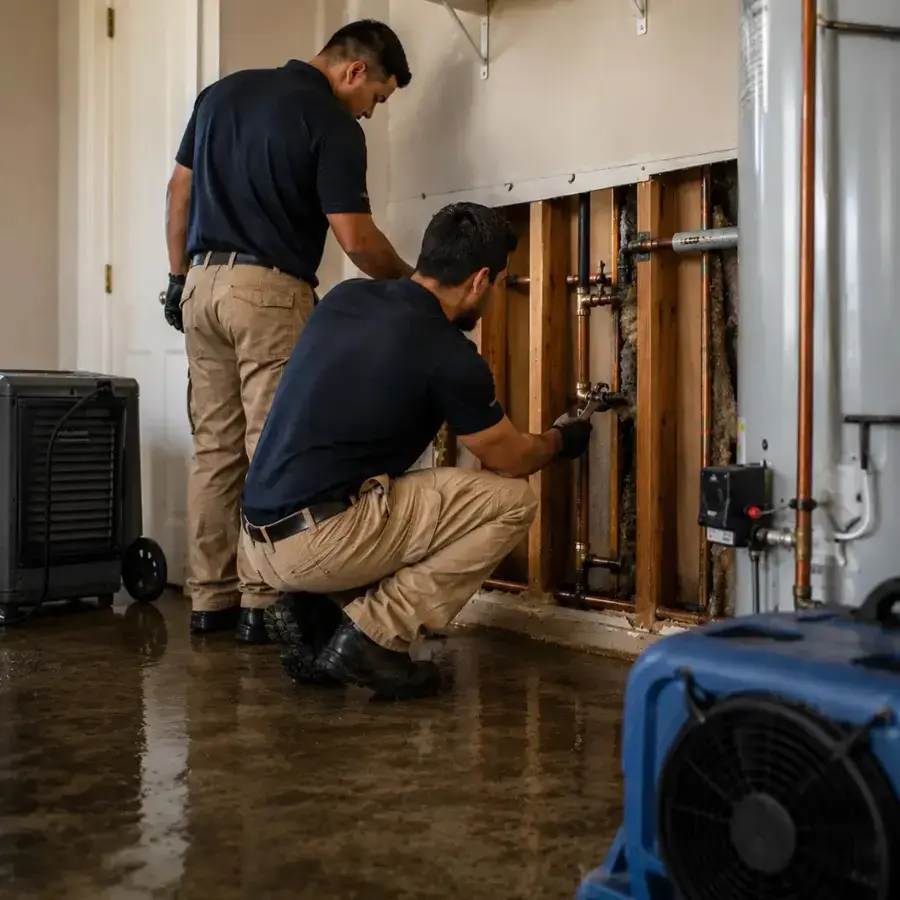
First steps for structural drying and dehumidification in San Bernardino
- Leave equipment on
Keep air movers and dehumidifiers running so the readings keep falling.
- Close doors and windows
Closed rooms let dehumidifiers work on the room, not the outside air.
- Clear the airflow
Keep furniture, boxes and curtains away from air movers.
- Keep the log
Save readings and visit notes for the claim file.
Structural Drying and Dehumidification trade facts
How structural drying and dehumidification is handled in San Bernardino
The tech who does the walkthrough maps moisture before any equipment goes down, and the equipment stays until the readings say dry.
- 1
Measure the loss
Meters, a thermal camera and an air check set the starting readings in every wet material.
- 2
Place the equipment
Air movers and dehumidifiers are sized to the class of loss and positioned to cover each wet surface.
- 3
Monitor each visit
Temperature, humidity and material readings are logged, and equipment is moved as areas dry.
- 4
Verify dry
Final readings are compared with dry reference points before equipment leaves.
Rapid local response
The response team runs 24/7 dispatch and treats active water as urgent, because every hour of wicking adds drying time.
IICRC S500 drying standard
IICRC S500 is the industry drying standard. Crews map moisture first and pull equipment only when the readings say dry.
Claim-ready documentation
A moisture map, daily psychrometric logs and timestamped photos taken before any demolition, the file an adjuster reads.
East Valley water know-how
Slab leaks under hard water, attic AC drains and foothill storm runoff: the local pros know how water moves in a Highland home.
What does structural drying and dehumidification cost in San Bernardino, CA?
San Bernardino structural drying costs $1,000 to $2,500 for class one or two, $2,500 to $5,000 for class three, $5,000 to $8,000 or more for class four.
Class one or two
- One or two rooms
- Air movers and one LGR unit
- Several days of drying
Class three
- Walls and ceilings wet
- Several dehumidifiers
- Daily psychrometric logs
Class four
- Hardwood, plaster or slab
- Desiccant dehumidifiers
- Extended drying time
These are typical ranges, not a quote: the category of water, the square footage, the material class and how fast drying started move the number most. Run the water damage cost calculator for a closer range; the restoration contractor who responds scopes the real job on site.
Extraction removes standing water, but wood, drywall, plaster and concrete keep absorbed moisture. Structural drying is the controlled process that pulls it out again, using airflow, warm dry air and measurements instead of guesswork.
How drying equipment works
- Air movers push dry air across wet surfaces to release moisture.
- LGR dehumidifiers pull the released moisture out of the air.
- Desiccant units handle dense or very wet materials, such as hardwood and slab.
- Thermal cameras and meters show where moisture is hiding.
San Bernardino's hot-summer Mediterranean climate and colder winters change how much moisture the air carries, so equipment is adjusted to the day's conditions. Water that soaked into a wall, floor or ceiling keeps working its way out for days, so equipment placement is planned around the wettest spots first.
Measuring until it is dry
Each visit, a technician records temperature and humidity in the room and moisture readings at the same material points. When a number stops falling or reaches the dry reference, equipment is moved or removed.
Wood framing, drywall, plaster and concrete each have their own dry goal, so one reading cannot declare a whole building dry. Class one and two jobs involve fewer materials, while class three and four jobs involve walls, ceilings, hardwood or slab and need heavier equipment.
After drying
The logs show which materials were wet, what equipment ran and when each area reached its goal. That file supports the claim and tells a rebuild contractor the structure is ready. For the first removal step, see water extraction, and for sudden pipe losses see burst pipe water damage.
Structural drying and dehumidification across San Bernardino and nearby communities
Structural drying runs in homes and commercial buildings across San Bernardino, from Verdemont and Arrowhead Farms to Downtown, Del Rosa, Blair Park and Hospitality Lane, including the 92401, 92405 and 92407 ZIP codes.
The same service nearby: structural drying and dehumidification in Highland, Colton, Loma Linda.
Water damage restoration in San Bernardino · every town covered
Structural Drying and Dehumidification questions in San Bernardino, CA
How long does structural drying take?
Most jobs run for several days, but the readings set the end date, not a fixed schedule. Dense materials such as hardwood or concrete take longer.
Why do dehumidifiers run along with air movers?
Air movers release moisture from surfaces, and dehumidifiers remove it from the air. Without both, the moisture simply moves around the room.
Can drywall be dried in place?
Often yes, if it is still firm and was exposed to clean water. Sagging, stained or contaminated drywall is usually removed.
What is a dry standard?
It is the moisture level typical of the same material in a dry part of the building. Drying continues until affected materials match it.
Is the noise normal?
Yes, equipment is loud. It can run for days, and shutting it off early leaves moisture that can cause odor and decay.
Does equipment have to run day and night?
Typically yes, since continuous airflow and dehumidification dry faster than short runs, and readings are checked each visit.
Dry to a measured standard
Surface dryness is not the same as a dry structure, so readings in framing, subfloor and walls decide when the job is done.