Storm Flood Cleanup in San Bernardino, CA
Runoff from foothill creeks and debris basins can leave a San Bernardino garage or floor under mud and silt. Crews remove the muck, extract the water, clean the surfaces and dry what remains.
(888) 578-6508Call for storm cleanup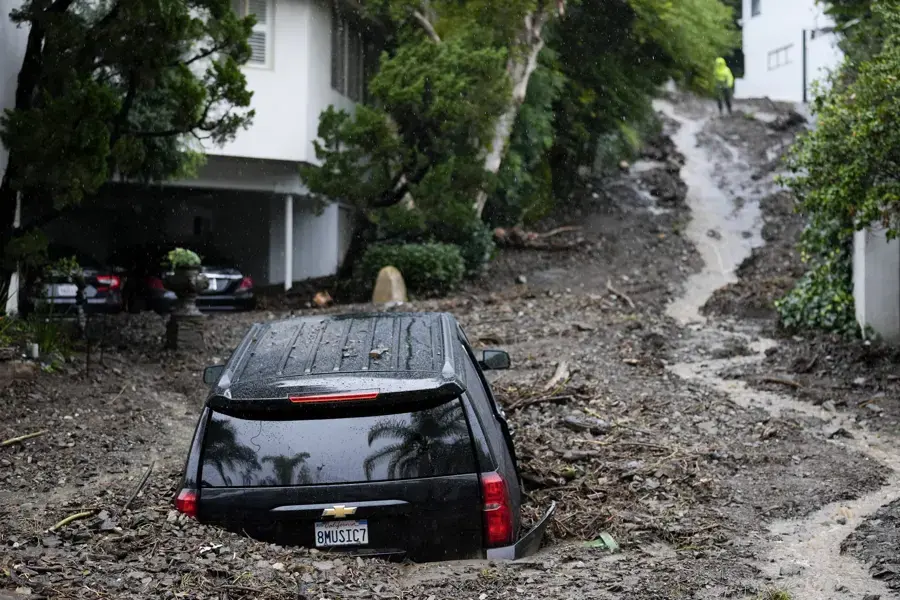
First steps for storm and flash flood cleanup in San Bernardino
- Stay out of the water
Floodwater can hide debris and live wires, so wait until the power is off.
- Protect your hands
Wear boots and gloves if anything must be moved from muddy areas.
- Skip the household vacuum
Ordinary vacuums should not be used on wet mud or water.
- Photograph everything
Record the high water marks and damaged contents before cleanup starts.
Storm and Flash Flood Cleanup trade facts
How storm and flash flood cleanup is handled in San Bernardino
The tech who does the walkthrough maps moisture before any equipment goes down, and the equipment stays until the readings say dry.
- 1
Remove the mud
Shovels, squeegees and wet vacuums clear silt before it hardens on floors and slabs.
- 2
Extract and sort
Standing water is pumped out, and soaked carpet, pad and lower drywall are separated for disposal.
- 3
Clean and treat
Hard surfaces are washed and an antimicrobial is applied in every area the water reached.
- 4
Dry the structure
Air movers and dehumidifiers run until the slab, framing and walls read dry.
Rapid local response
The response team runs 24/7 dispatch and treats active water as urgent, because every hour of wicking adds drying time.
IICRC S500 drying standard
IICRC S500 is the industry drying standard. Crews map moisture first and pull equipment only when the readings say dry.
Claim-ready documentation
A moisture map, daily psychrometric logs and timestamped photos taken before any demolition, the file an adjuster reads.
East Valley water know-how
Slab leaks under hard water, attic AC drains and foothill storm runoff: the local pros know how water moves in a Highland home.
What does storm and flash flood cleanup cost in San Bernardino, CA?
Storm and flood cleanup in San Bernardino runs about $3,000 to $6,000 for a garage or single room, $6,000 to $12,000 across several rooms and $12,000 to $20,000 or more for major flooding with deep mud or debris.
Garage or one room
- Runoff across a slab floor
- Mud and silt out
- Antimicrobial and drying
Several rooms
- Carpet, pad and lower drywall out
- Containment and disposal
- Structural drying
Major flooding
- Deep mud or debris flow
- Most porous materials removed
- Extended drying and cleaning
These are typical ranges, not a quote: the category of water, the square footage, the material class and how fast drying started move the number most. Run the water damage cost calculator for a closer range; the restoration contractor who responds scopes the real job on site.
Storm water is not clean water. It carries soil, debris and whatever it crossed on the way in, so a flooded room is cleaned and disinfected as well as dried, and porous materials that took it in usually have to go.
Why mud is the local story
- City Creek, Lytle Creek, San Timoteo Creek, Twin Creek and Warm Creek feed the Santa Ana River along the city's southern border.
- In January and February 1980, Harrison Basin overflowed four times into the neighborhood below.
- A county grant of $2,521,678 supports a debris and detention basin at the Cable Creek spreading grounds.
- An October 2004 storm was expected to push large runoff off recently burned watersheds.
Past storms are a reminder that runoff here arrives loaded with sediment, and that the creek channels and basins above the city shape how much reaches a street.
Cleaning up after runoff
Mud is shoveled and vacuumed before it dries into a crust, then the water is extracted and surfaces are washed. Carpet, pad and lower drywall that soaked up flood water are cut out, bagged and hauled away, since they cannot be made reliably clean.
Containment keeps the dirty work from spreading to dry rooms, and crews wear protective gear while they handle debris. Hard surfaces such as concrete, tile and sealed wood are washed and treated with an antimicrobial. A garage slab with runoff on it is often the simplest case, while a flooded living area needs far more removal.
Drying after the mud is out
Once the debris is gone, air movers and dehumidifiers dry the slab, framing and any remaining walls, with readings logged. If sewage mixed with the flood, the job adds the steps in sewage backup cleanup, and structural drying finishes the structure.
Storm and flash flood cleanup across San Bernardino and nearby communities
Storm cleanup covers all of San Bernardino, including the hills of Verdemont and Arrowhead Springs, central areas such as Downtown and Arrowview, and Riverview in the south, in ZIP codes like 92410 and 92411.
The same service nearby: storm and flash flood cleanup in Highland, Colton, Loma Linda.
Water damage restoration in San Bernardino · every town covered
Related water damage services in San Bernardino
Storm and Flash Flood Cleanup questions in San Bernardino, CA
Is storm flood water considered contaminated?
Yes. Runoff picks up soil, oil and debris on its way in, so it is treated as contaminated and porous materials it soaked are usually removed.
Can mud be left to dry before cleaning?
Mud hardens and traps moisture against the slab and walls, so it is best removed while still soft, then the surface is washed and dried.
Why check the policy after a flood?
Flood and runoff are often treated differently from a sudden pipe break, so reading the policy early shows what documentation an adjuster will want.
What gets thrown out after a flood?
Carpet, pad, lower drywall and insulation that soaked in flood water are usually discarded. Concrete, tile and solid wood can often be cleaned and dried.
Can a crew work while it is still raining?
Cleanup can begin once the water has stopped coming in. Crews extract and set up containment, then return to heavier removal if the rain returns.
Is a flooded garage a big job?
Often not. A garage slab with runoff on it is the simplest storm case, though anything stored on the floor and the wall bottoms still need checking and drying.
Get the mud out early
Silt and flood water settle into pad, drywall and slab, so cleanup starts with removal and ends with verified drying.