Structural Drying in Redlands, CA
Redlands buildings range from houses begun in 1887 to newer apartment complexes. Crews match dehumidifiers and air movers to the building, then log readings daily until every surface is dry.
(888) 578-6508Book structural drying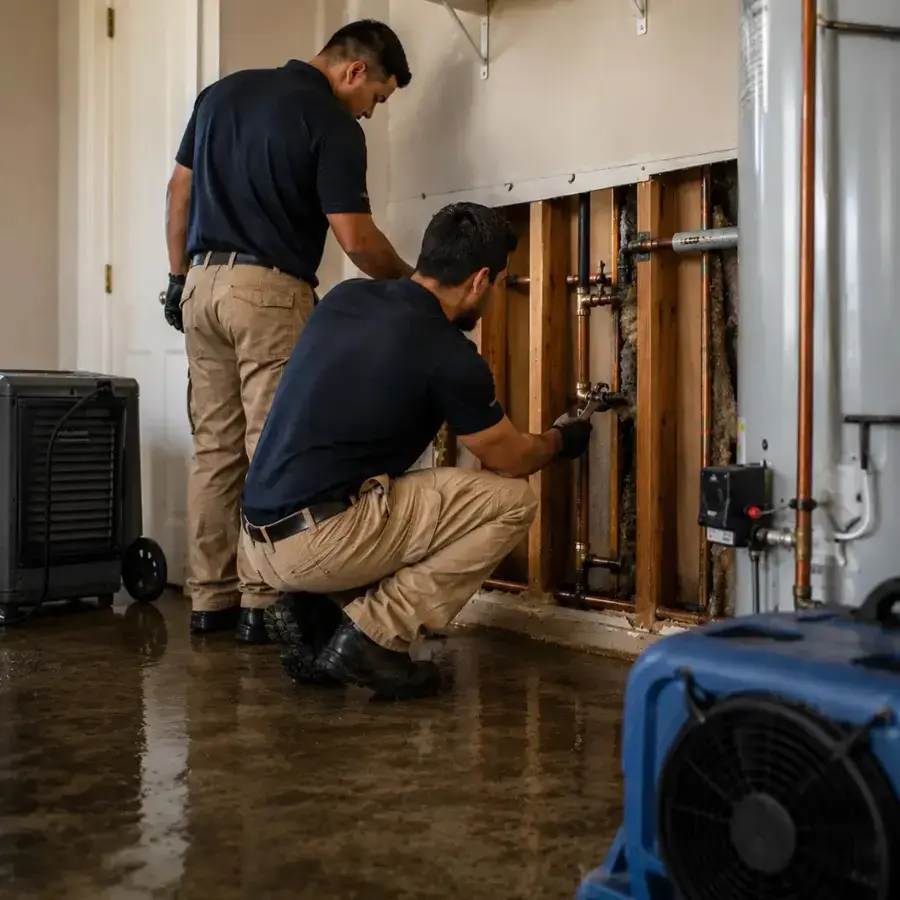
First steps for structural drying and dehumidification in Redlands
- Remove standing water
Extraction should come first so drying equipment has less to handle.
- Close the room
Shut doors and windows so dehumidifiers can work properly.
- Leave equipment on
Do not turn units off or move them, because the plan depends on placement.
- Ask for readings
Call dispatch to schedule readings if a room still feels damp.
Structural Drying and Dehumidification trade facts
How structural drying and dehumidification is handled in Redlands
The tech who does the walkthrough maps moisture before any equipment goes down, and the equipment stays until the readings say dry.
- 1
Measure the room
Temperature, humidity and moisture readings in each material set the starting point.
- 2
Place the equipment
Air movers and dehumidifiers go where readings are highest, not just where space is open.
- 3
Monitor daily
Each visit adds new readings, and units move or are added as needed.
- 4
Pull the equipment
When materials match a dry reference, equipment comes out and the logs are filed.
Rapid local response
The response team runs 24/7 dispatch and treats active water as urgent, because every hour of wicking adds drying time.
IICRC S500 drying standard
IICRC S500 is the industry drying standard. Crews map moisture first and pull equipment only when the readings say dry.
Claim-ready documentation
A moisture map, daily psychrometric logs and timestamped photos taken before any demolition, the file an adjuster reads.
East Valley water know-how
Slab leaks under hard water, attic AC drains and foothill storm runoff: the local pros know how water moves in a Highland home.
What does structural drying and dehumidification cost in Redlands, CA?
Structural drying cost depends on the drying class, the size of the wet area and the materials involved. Denser materials and larger areas need more equipment and more days.
Lighter loss
- One or two rooms
- Air movers and one dehumidifier
- Short drying
Walls and ceilings
- Several dehumidifiers
- Daily psychrometric logs
- Longer run
Dense materials
- Hardwood, plaster or concrete
- Desiccant units
- Extended drying
These are typical ranges, not a quote: the category of water, the square footage, the material class and how fast drying started move the number most. Run the water damage cost calculator for a closer range; the restoration contractor who responds scopes the real job on site.
Structural drying is where most of a water job is won or lost. Removing visible water is quick, but wet framing, subfloor and drywall hold moisture for days, and surfaces can look dry while the inside is not. Equipment and monitoring turn that hidden moisture into numbers that can be checked.
How a drying plan is built
A crew measures the temperature and humidity of the room, reads moisture in each material and then picks the equipment. Air movers push dry air across surfaces, dehumidifiers pull water out of the air and desiccant units help in dense or cold materials. Each visit adjusts the setup based on the readings.
- Smaller losses use fewer units and finish sooner.
- Wet walls and ceilings mean more dehumidifiers and longer runs.
- Hardwood, plaster and concrete need slow, controlled drying.
- Each reading is compared with a dry reference from an unaffected area.
Daily logs record temperature, humidity and moisture, which gives an adjuster proof that the equipment was needed and when the job ended.
Drying different Redlands buildings
Smiley Park houses began going up in 1887 and later turned toward American Craftsman, so old wood, plaster and trim are common. Those materials need controlled drying so they do not crack or cup. Newer multifamily buildings, such as the 328 unit LuxView Apartments phase II, entitled in 2019, have more drywall and concrete, and the drying plan changes with the structure.
What owners can do
Keep doors and windows closed once equipment is running, stay away from the cords and do not turn the units off. Dehumidifiers work best in a closed room. For water still on the floor, water extraction comes before drying, and a burst pipe job usually needs both.
Structural drying and dehumidification across Redlands and nearby communities
Structural drying is dispatched across Redlands in ZIP codes 92373 and 92374, from Smiley Park homes to apartment buildings, shops in the Santa Fe Depot District, Lugonia and neighborhoods near Mentone.
The same service nearby: structural drying and dehumidification in Highland, Loma Linda, Grand Terrace.
Structural Drying and Dehumidification questions in Redlands, CA
How long does drying take?
It depends on the materials, the amount of water and the equipment. The crew tells the owner when readings reach the dry reference.
Why are the machines so loud?
Air movers and dehumidifiers move large volumes of air to pull water out, and the noise is part of the process.
Can the equipment be turned off at night?
Not without slowing the job. The drying plan relies on continuous running.
How does the crew know a wall is dry?
Meters read moisture inside the material and are compared with a dry reference from an unaffected area.
Will mold form during drying?
Drying removes the moisture mold needs, so fast drying is the best prevention, and affected cavities are checked.
Does the electric bill go up?
Equipment draws power while it runs, so the bill rises for the drying period. Owners can mention it to the adjuster.
Walls still damp?
Dispatch can arrange readings and equipment, then a crew sets up dehumidifiers and air movers and logs progress until the structure tests dry.