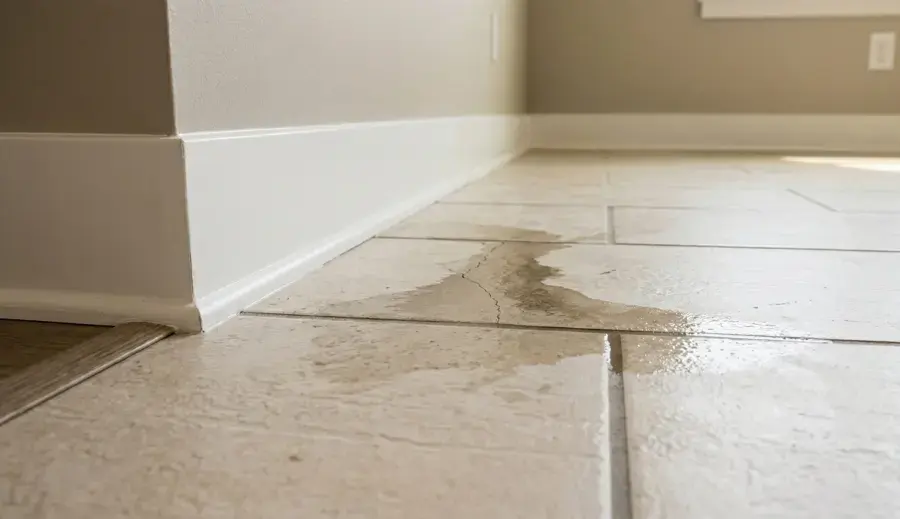
A slab leak is a supply pipe that fails in the ground beneath a concrete floor, where nobody can see it. In Highland, where many homes in East Highlands Ranch and nearby tracts were built on slabs in the 1980s and 1990s, the first clue is often a sound or a bill, not a puddle. This post lists the signs, the first steps and what repair work does to flooring.
Key takeaways
- Copper supply pipe under a slab can develop pinholes under hard water and street pressure, which is why slab leaks show up in older Highland tracts.
- Common signs are a warm spot on the floor, the sound of running water when everything is off, and damp baseboards.
- Shutting off the main valve stops the flow, but it does not dry the slab or the flooring above it.
- Flooring over the leak is usually lifted so the slab and the layers above can be dried with readings.
- A quick check of the meter and a visit to the risk check page can help a homeowner decide how urgent the situation is.
Why slab leaks happen in Highland tracts
Most homes in East Highlands Ranch and the Highland Hills area were built in the 1980s and 1990s on slab on grade foundations. The supply pipes in those tracts are copper and run through or beneath the concrete.
Copper can pinhole over time under hard water and street pressure. A pinhole leak is small, so it can run for weeks before anything is visible.
Older parts of town near Palm Avenue have different plumbing, but the tract homes are the ones where a slab leak is most often discussed.
A leak that starts under a slab does not stay under it. Water follows the path of least resistance, so it often rises at a control joint, a wall base or a plumbing penetration, which is why the first visible sign can be several feet from the actual pipe.
- Copper pipe that sits against concrete and soil
- Hard water that wears at the inside of the pipe
- Steady street pressure pushing against small weak spots
Signs that point to a slab leak
No single sign proves a slab leak. Two or three together are a stronger reason to call for leak detection.
- A warm or hot spot on a tile or laminate floor when the heater is not running
- The sound of running or hissing water when every fixture is off
- A water bill that climbs without a change in habits
- Damp or stained baseboards along one wall
- Carpet that feels wet or smells musty near an exterior wall
- Cracked or lifting grout joints in tile that were not there before
A simple meter check
With every faucet and appliance off, a homeowner can watch the water meter dial for a few moments. If the dial is still moving, water is leaving the system somewhere.
The slab leak risk check walks through the same questions in an organized way.
What to do right away
The aim is to stop the flow and protect what the water has not reached yet.
A leak that has run for a while can also make the floor feel soft or cool underfoot. If the carpet is damp near an outside wall or the floor feels different in one room, take a photo of the spot and mark it with painter's tape for the technician.
- Close the main water shutoff at the house.
- Turn off the water heater so it does not heat an empty tank.
- Photograph damp flooring, baseboards and the meter reading.
- Lift rugs and move furniture off wet floors.
- Keep fans running to move air, but do not use a heater near wet carpet.
Why shutting off the water is only the first step
Water that already reached the slab and the flooring stays there. Concrete holds moisture for a long time, so drying is a separate job from stopping the leak.
What leak detection involves
Before any floor is opened, a leak detection technician locates the pipe that is failing. Pressure tests, listening equipment and thermal imaging help narrow the spot to a small area.
Locating the leak precisely matters because it limits how much flooring has to come up. It also tells the plumber where to cut.
- Pressure testing isolates which supply pipe is losing water
- Acoustic listening catches the sound of escaping water through the slab
- Thermal imaging shows warm spots where hot water pipes are leaking
- The findings go into a short report that the insurer may ask to see
How flooring and the slab are handled
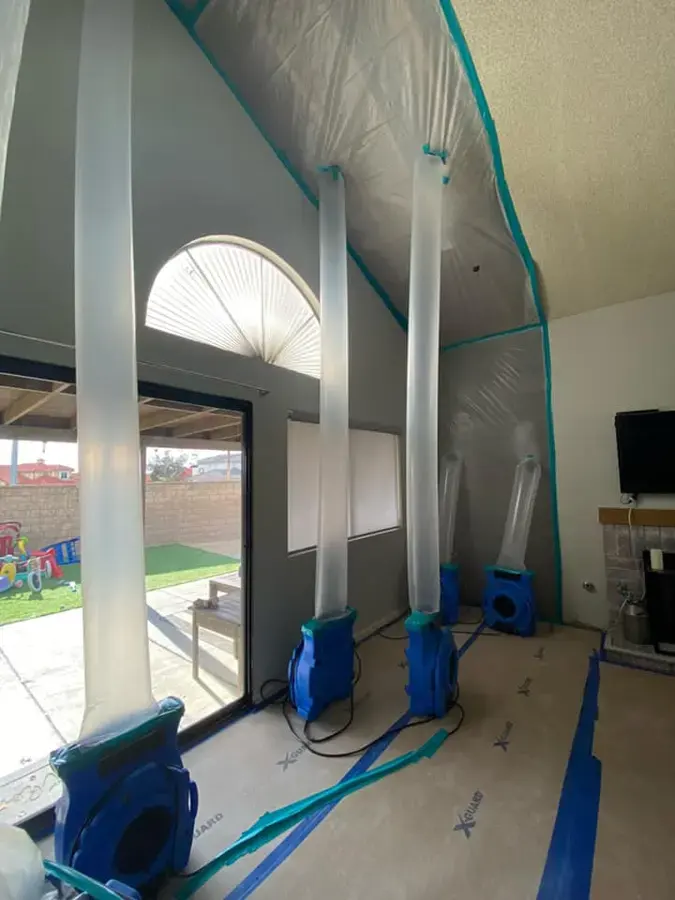
Once the leak is traced, the floor above it comes up so water can leave the slab. A slab leak water damage job usually starts with moisture mapping across the rooms nearest the suspected leak.
Carpet, pad and tile
Carpet and pad are lifted and removed if they stayed wet. Tile is often left in place if readings show the slab can dry through it, and pulled where water has traveled underneath.
Baseboards and lower drywall
Baseboards come off, and lower drywall is opened where readings show water has wicked up from the slab. Cuts are kept above the highest reading.
Hardwood, cabinets and walls above the slab
Wood reacts to slab moisture more strongly than tile. Engineered or solid hardwood can cup or buckle when water rises through the concrete.
Cabinet bases and baseboards sit directly on the slab edge and wick moisture upward. A crew checks them with a meter and removes toe kicks to let the base dry.
- Hardwood that cups or gaps along seams is usually removed
- Laminate swells at the edges and rarely recovers
- Cabinet toe kicks come off so the base can be dried and checked
- Walls near the leak are opened only as high as the readings require
Drying a slab takes longer than drying a wall
A concrete slab is dense. Water leaves it slowly, so structural drying for a slab leak typically uses low grain refrigerant dehumidifiers and sometimes desiccant units.
Moisture readings are taken at set points on the floor and walls, and logged every visit. Equipment comes out only when those numbers match a dry reference.
Repairs and the claim notes
Slab leak repair means a plumber has to access the pipe, either by breaking into the slab or by rerouting the supply. That work is separate from the drying.
Homeowners can help the claim by keeping the leak detection report, the plumber's findings and dated photos of the flooring before it was lifted. A related burst pipe water damage page explains how supply failures differ when the leak is in a wall instead.
Plumbers, restoration crews and insurers each handle a different piece of the job. Keeping their reports in one folder makes it easier to show the full chain from detection to dry readings.
Questions
What does a slab leak sound like?
Many homeowners describe a faint hiss or rushing sound near the floor when every fixture is off. Quiet nights make it easier to notice.
Is a warm spot on the floor always a slab leak?
No. A warm floor can also come from a heater duct or radiant system. It is a reason to check the meter and call for detection, not proof of a leak.
Do all Highland homes have slab foundations?
Many tract homes from the 1980s and 1990s do, including those in East Highlands Ranch. A homeowner can confirm the foundation type from home records or a plumber.
Can the floor be dried without lifting it?
Sometimes tile or sealed flooring can dry through readings and equipment. Carpet, pad and wet underlayment are normally removed.
Does the water heater need to be shut off?
If the main valve is closed, shutting off the water heater prevents it from heating an empty or draining tank.