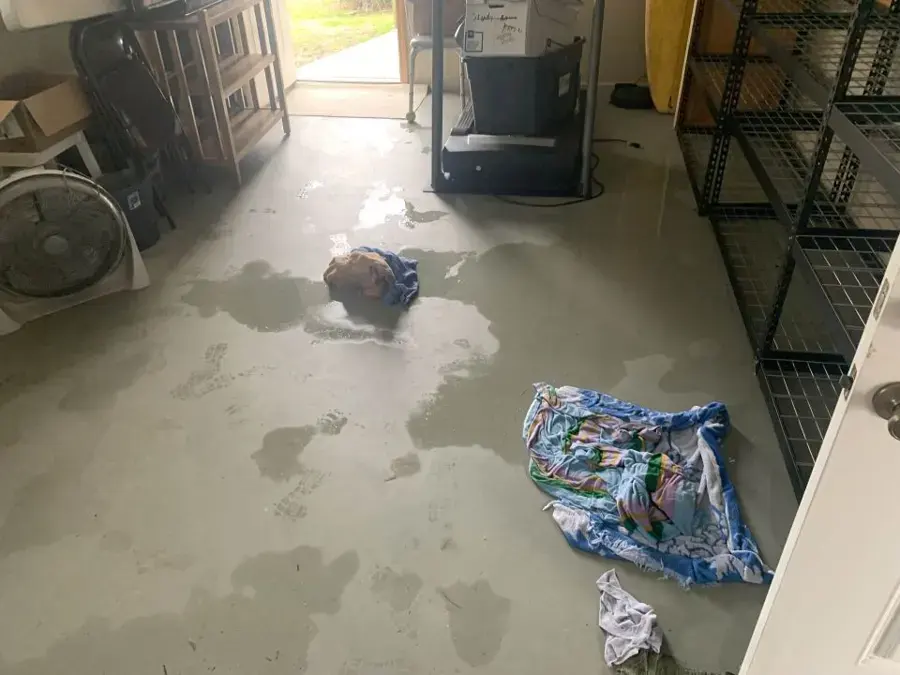
In many Highland homes the water heater sits in the garage or a hall closet, and when a tank fails the water goes straight for the slab, the wall base and the rooms next door. This post covers what to shut off, where the water travels in 1980s and 1990s slab homes, how drying works, and what a homeowner can do to lower the odds of a repeat.
Key takeaways
- Garage and closet water heaters are common in Highland, and a failed tank can spread water across the slab and into adjoining rooms.
- Shutting off the cold water supply and the power or gas to the tank stops the flow and makes the area safer.
- Many Highland homes are slab on grade, so there is no crawl space and water tends to spread sideways under wall bottoms.
- Extraction, wall base drying and cabinet checks come before the tank is replaced.
- Hard water sediment can shorten a tank's life, so draining and inspecting it helps.
Why water heaters fail in garages and closets
Highland's older core and its 1980s and 1990s tract homes often place the tank in the garage or a closet near the laundry. A tank holds a large volume of water, and when its inner lining wears out, the steel shell can corrode through.
Highland's water carries hard minerals, which build up as sediment at the bottom of a tank. That layer can trap heat, speed up wear and make a seam or fitting more likely to weep.
Heat cycles also stress the tank. Each time the heater fires, the metal expands and contracts, and years of that movement can open a seam that was sound when the tank was installed.
- A corroded tank bottom or seam
- A leaking drain valve, relief valve or supply connection
- Sediment buildup that shortens the tank's life
- Age, since most tanks only last a limited time
First steps when a tank starts leaking
The goal is to stop the water and protect the electrical and gas connections.
If the tank is leaking from a fitting at the top, the water usually runs down the outside of the tank. That can look like a failed tank when only a connection needs attention, so a plumber should confirm the source.
- Close the cold water shutoff above the tank.
- Turn off power at the breaker for an electric tank, or set a gas tank to pilot or off.
- Photograph the tank, the water and any wet walls or boxes.
- Move stored items out of the wet area and off the floor.
- Do not stand in water near electrical outlets or the breaker panel.
- Open the garage door to let air circulate if the weather allows.
Do not drain the tank onto a wet slab
If the tank still holds water, run a hose to a drain or the yard rather than letting it empty across the floor.
Where the water travels in a slab home
Slab on grade construction leaves nowhere for the water to drain below the floor. Water spreads across the garage slab, then finds the lowest path under the wall base into the house.
The shared wall between a garage and a laundry room or hallway is often the first to wick. Drywall absorbs water upward from the bottom edge, and baseboards, flooring and cabinet toe kicks follow.
Stucco and block walls on the garage exterior can hold water at their base, and a sill plate or bottom plate of a wall can stay wet long after the surface looks dry.
- Garage slab and stored boxes
- Drywall at the bottom of the shared wall
- Baseboards and flooring in an adjoining room
- Cabinets and laundry appliances near the water heater
What extraction and drying look like
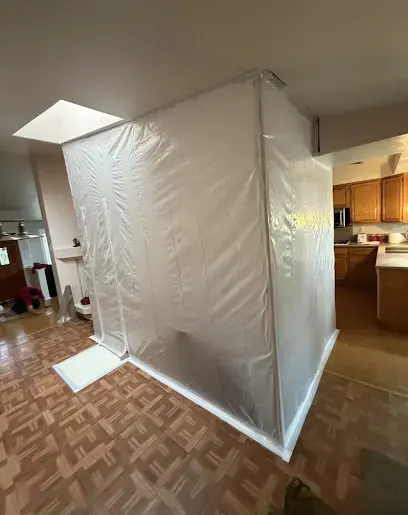
A water heater leak cleanup job starts with extraction and a moisture map, and the equipment is set up to dry the wall base and the floor edge.
Extraction and removal
Water extraction pulls the standing water, and wet carpet pad, baseboards and a strip of lower drywall are removed if readings show wicking.
Stored boxes, paper and fabric are sorted before disposal, and the crew photographs anything discarded for the claim.
Drying the wall base and slab
Air movers and a dehumidifier run until readings in the framing and the slab return to normal. A garage slab often dries faster than the wall base next to it, so the readings decide when equipment is removed.
The drying time estimator gives a general idea of how long different materials need.
Garage versus closet tanks
A tank in a garage spreads water across a large open slab and rarely reaches finished floors unless the door to the house is low. A tank in a hall closet is different, because the water goes straight into carpet, hardwood and nearby cabinets.
Closet failures usually mean more removal inside the house. Garage failures often stay on the slab and the shared wall.
Either way, the sooner the water is extracted, the less it travels.
A garage with a floor drain moves some water away quickly, but the drain can also back up if debris is in it, so the area around the drain is checked.
What the claim and the cleanup records include
A water heater failure is usually a sudden event, which helps when an insurer looks at a claim. Clear records of when the leak was found and what was done make that process easier.
The restoration team adds extraction volumes, moisture readings and photos of removed materials. The homeowner's own photos of the tank and the first water show the starting point.
- Photos of the failed tank, the water and the wet items before cleanup
- The date and time the leak was found, and when the shutoff was closed
- The plumber's note on the cause and the replacement tank
- The restoration scope, equipment list and daily moisture log
- Receipts for emergency supplies and temporary lodging, if any
Replacement, records and prevention
A leaking tank is normally replaced, not repaired. A plumber can advise on the replacement, and the local building department can confirm whether a permit is needed for the work.
For the claim, keep photos of the tank and the water, the plumber's report and the restoration team's moisture log. The appliance and supply hose page explains how other fixtures are handled.
Some Highland owners add a small pan and a water sensor near the tank. A sensor does not stop a leak, but it can sound an alarm before the water has spread across the slab.
- Check the tank base and fittings for rust or damp spots
- Drain a few gallons from the tank each year to move sediment
- Know where the cold water shutoff is and test it
- Consider a drain pan that is piped to a safe discharge point
Questions
Where is the cold water shutoff for a water heater?
It is usually on the pipe that enters the top of the tank. The home's main shutoff also stops all water if the tank valve is stuck.
Does water from a garage water heater reach the house?
In slab homes it often does. Water spreads across the slab and can wick into the drywall and flooring of an adjoining room.
Can the drywall at the wall base be saved?
Sometimes. If readings show it is dry above a certain height, only the bottom strip is cut out.
Why does hard water matter to a water heater?
Hard minerals settle as sediment at the bottom of the tank, which can shorten its life and make leaks more likely.
Is the leak repaired or is the tank replaced?
A leaking tank is normally replaced. The cleanup handles the water damage that the leak caused.
Should a homeowner move stored boxes out of the garage after a leak?
Yes, off the wet floor and away from the walls. Cardboard wicks water quickly, so photograph the contents and sort them while the crew works.