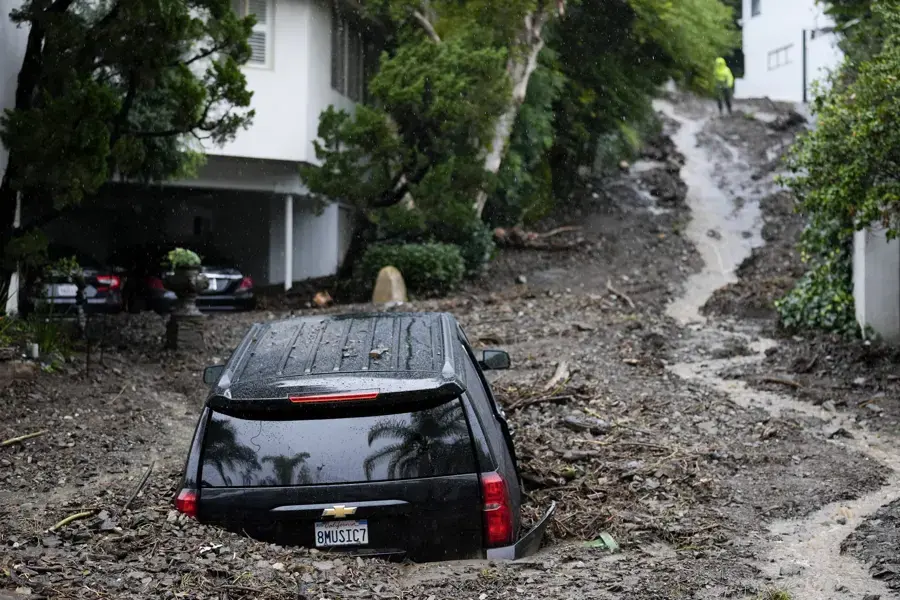
When a winter storm sends runoff down from the foothills, the water that reaches a Highland garage or ground floor rarely arrives clean. It carries silt, gravel and yard debris, and it can settle into carpet and wall bottoms before the street drains. This post covers where that water comes from, why mud is handled differently from a plumbing leak, and what a crew removes first.
Key takeaways
- Runoff and mud that enter a home count as Category 3 water, so soaked porous materials are usually removed rather than saved.
- Highland sits near City Creek, Plunge Creek and the Santa Ana River wash, and the 2003 Old Fire burn scars raise debris flow risk in winter storms.
- Before anything is touched, power to wet areas should be off, the water level photographed and children and pets kept out.
- Extraction takes standing water and silt first; cleaning and drying follow once wet carpet, pad and lower drywall are out.
- Garages, sheds and block walls need the same check as the house, because slab homes let water travel under wall bottoms.
Where Highland storm water comes from
Highland sits at the base of the foothills, and two creeks and a wide river wash shape its storm story. City Creek and Plunge Creek drain the slopes above town, and the Santa Ana River wash runs along the valley edge.
Seven Oaks Dam stands upstream on the Santa Ana River. That matters for the river, but it does nothing for runoff that starts on the slope behind a house or the street out front.
Most rain here falls in a few winter storms, so one wet week can deliver a large share of the year's water. Summer monsoon storms over the mountains can also push runoff downhill in the heat.
- Silt and fine mud that settles into carpet and under baseboards
- Gravel and yard debris pushed against garage doors and side gates
- Rainwater mixed with soil, fertilizer and animal waste
- Water that drains slowly across a slab floor instead of leaving
Burn scars and debris flow
The 2003 Old Fire burned the hills above Highland, and burn scars raise debris flow risk in winter storms. Scorched slopes hold less water, so rain runs off faster and carries more soil with it.
For a homeowner, the practical result is thicker mud. A debris flow leaves a heavier load than ordinary runoff, and it is harder to sweep or squeegee out.
Why storm mud is Category 3 water
Water from a leaking supply pipe starts clean. Runoff does not.
It crosses roads, yards and washes before it reaches a door, and it collects whatever is on the ground.
Restoration practice puts that kind of water in Category 3, the most contaminated class. The label changes the work, because carpet and pad are removed rather than dried in place.
The storm and flash flood cleanup page explains how that sorting works in more detail.
What usually goes
Materials that act like a sponge take up contaminated water and are hard to clean.
- Carpet and cushion that held runoff
- Lower drywall and insulation that wicked the water upward
- Particle board toe kicks and cabinet bases that swelled
What can often stay
Hard, sealed surfaces can be cleaned and dried instead of replaced.
- Concrete slab and sealed tile
- Sealed hardwood after moisture readings
- Framing, once it is cleaned and dried
First steps before cleanup starts
The opening stage of a storm loss is about safety and records, not scrubbing. A few careful steps protect the family and make the later claim easier.
- Turn off power to wet rooms at the panel if it can be reached dry; never stand in water to do it.
- Photograph the water level on walls and the depth of mud, with a tape measure in the frame when possible.
- Move valuables to higher ground, but leave mud covered items for the crew to sort.
- Keep children and pets out of the room, and wear boots and gloves when walking through the mud.
- Write down the time the water entered and the storm date for the insurance notes.
Reading the room after the water drops
Once the street drains, a house can look better than it is. Water that stood against a wall for even a short time may have moved into the cavity behind it.
A crew checks the room with moisture meters and, where needed, a thermal camera. Those readings show water that a person walking through cannot see.
- Press on baseboards and carpet edges; soft or swollen spots signal wicking
- Look for a tide mark of silt on the wall that shows how high the water stood
- Check the bottom of door frames and cabinet toe kicks
- Note any smell of mud or earth, which means moisture is still in the room
What extraction removes first
The crew works from the bulk of the problem to the fine detail. Water and mud come out before any drying equipment is set.
Standing water and loose silt
Truck mounted and portable extractors pull the standing water, and shovels and squeegees move the heavy silt. Pulling water extraction first keeps the damp from climbing the walls.
Soaked porous materials
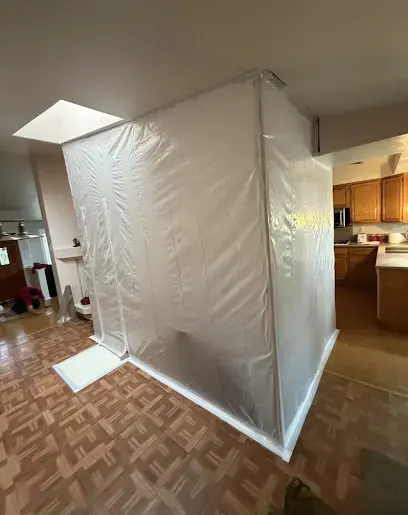
Carpet, pad and cut drywall are bagged and removed. Cuts in the drywall are made above the visible wicking, and the crew checks the cavity behind each cut.
What the insurance file needs
Storm losses are documented before the cleanup changes the room. Adjusters look for the extent of the water, the materials affected and the cause.
A short, organized file saves time later. The crew adds its own moisture readings and dated photos, but the homeowner's first pictures often show the highest water mark.
- The date and rough time the water entered
- Photos of every wet room taken from the doorway and from the corners
- A list of damaged furniture, rugs and stored items with approximate values
- The names of anyone who helped move belongings
- Receipts for any emergency supplies bought during the storm
Why wet mud should not wait for the claim
Delay does not help a claim. Wet silt dries into carpet backing and wicks into drywall, and it makes later cleaning more expensive.
Photograph first, then start the cleanup.
Garages, sheds and block walls
Highland has many 1980s and 1990s tract homes on slab foundations, including East Highlands Ranch. There is no crawl space for water to drain into, so runoff that gets past a garage door tends to spread across the slab and under wall bottoms.
Garages are often the first place hit, because the door sits at the lowest edge of the house. A pile of stored boxes against a wall can wick mud water for days.
Sheds, side yards and block walls near Greenspot Road and Boulder Avenue deserve the same inspection. A wet block wall can feed moisture back into the house long after the street is dry.
Drying once the mud is out
After the cleaning, the structure still holds moisture. Air movers and dehumidifiers run until readings in the framing come back to normal, and the crew logs those readings each day.
Homeowners can get a rough sense of how long it takes with the drying time estimator. For wet framing and slab edges, structural drying covers the equipment and the readings that decide when it stops.
Questions
Is storm mud really different from a pipe leak?
Yes. Runoff carries soil and contaminants, so it is treated as Category 3 and soaked carpet, pad and lower drywall are usually removed instead of dried.
Does Seven Oaks Dam protect Highland homes from flooding?
The dam sits upstream on the Santa Ana River. It does not control runoff from the slopes and streets beside a house, so local storm water can still enter a home.
Can the mud be left until the weather clears?
Waiting lets silt dry into carpet and wick into drywall. Photographing first and starting extraction soon after limits how far the damage spreads.
What should be saved for the insurance claim?
Photos of the water level and the mud, a list of damaged items, the storm date and any notes from moisture readings. Damaged materials are usually photographed before they are removed.
Are garages treated the same way as the rest of the house?
The slab is cleaned and dried the same way, and stored boxes, drywall and wood in the garage are checked for wicking before any are kept.